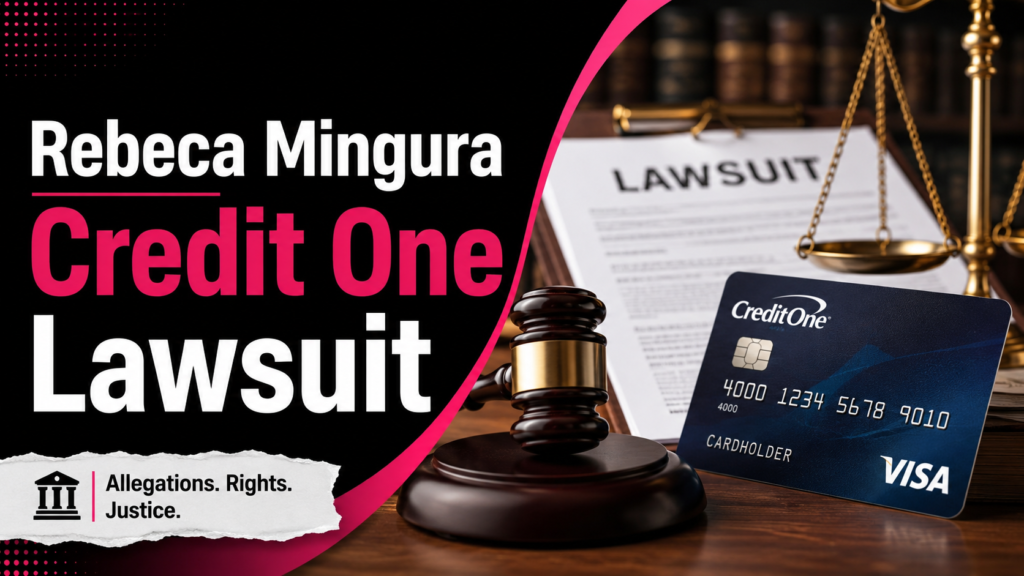

More than 578 phone calls in four months. That’s what plaintiff Rebeca Mingura says she received from Credit One Bank, even after she told the company to stop. If that number stopped you, you’re not alone: the rebeca mingura credit one lawsuit has become one of the most searched TCPA cases of the year, and for good reason. It sits at the intersection of two things a lot of people are dealing with right now: aggressive debt collection calls and confusion about what the law actually allows.
This guide breaks down what’s actually been alleged, what the law says, where the case stands today, and what you can do if you’re facing something similar. No hype, no fake settlement numbers, just the facts as they exist in the court record right now.
What Is the Mingura v. Credit One Bank Lawsuit?
The case is formally known as Mingura v. Credit One Bank, N.A., filed August 8, 2025, in the U.S. District Court for the Northern District of California, Case No. 4:25-cv-06712.
Plaintiff Rebeca Mingura alleges that Credit One Bank used automated dialing technology to call her cell phone hundreds of times over roughly four months in 2025, attempting to collect on an alleged debt. According to the complaint, she informed the bank of her status as a disabled senior citizen, requested that the calls stop, and even had her attorney send a cease-and-desist letter. The calls allegedly continued anyway.
That combination of facts, a specific and unusually high call count, an explicit revocation of consent, and a documented cease-and-desist, is what makes this case worth watching. It’s a fairly clean test of how far a creditor can push automated collection before it crosses a legal line.
A quick note if you’re searching for this case: Credit One Bank is not Capital One. The names sound similar, and it’s an easy mix-up. If the calls you received came from Capital One Financial, this lawsuit doesn’t apply to your situation.
The Three Laws at the Center of the Case
Mingura’s complaint cites three separate statutes, each doing different work:
- The Telephone Consumer Protection Act (TCPA), a federal law
- California’s Rosenthal Fair Debt Collection Practices Act (RFDCPA), a state law
- California’s Unfair Competition Law (UCL)
Understanding why all three matter is the key to understanding the whole case.
What Constitutes a TCPA Violation?
The Telephone Consumer Protection Act is a federal law passed in 1991, codified at 47 U.S.C. § 227, that regulates how companies can contact you by phone. It was written before smartphones existed, but it’s become one of the primary tools consumers have against robocalls.
In plain terms: a company generally cannot use an automated telephone dialing system (an autodialer) or a prerecorded voice message to call your cell phone without your prior express consent. If you gave consent and later revoke it, clearly and in a way the company can document, the calls are supposed to stop.
Mingura’s complaint alleges Credit One did exactly what the TCPA prohibits: continued using automated dialing after consent was revoked. This is the heart of the TCPA violation claim.
Why “Automated Dialing Systems” Matter Legally
Not every unwanted call is a TCPA violation. The law specifically targets calls placed through automated dialing systems, equipment capable of storing or producing numbers and dialing them without a human manually placing each call, or prerecorded/artificial voice messages.
This distinction matters in court. If a live human being manually dials your number, that’s generally outside the TCPA’s autodialer restrictions (though other laws may still apply). If a system dials you automatically, in bulk, that’s squarely what the statute was built to stop.
Courts rely heavily on call logs, dialer records, and telecom metadata to determine which category a given call falls into. That’s part of why reliable evidence matters so much in litigation like this.
Statutory Damages Under the TCPA
Here’s where the numbers get real. The TCPA doesn’t require you to prove financial loss. It provides statutory damages per violation, meaning per unlawful call:
- $500 per negligent violation
- Up to $1,500 per willful or knowing violation
If Mingura’s allegation of 578+ calls holds up, and even a fraction were found to violate the TCPA, the math adds up fast. That’s the mechanism behind why TCPA cases can carry significant exposure for defendants, and why they attract serious legal attention.
What Is the Rosenthal Fair Debt Collection Practices Act (RFDCPA)?
This is where a lot of general-audience articles get something wrong, so let’s be precise about it.
The federal Fair Debt Collection Practices Act (FDCPA) only applies to third-party debt collectors, companies hired to collect someone else’s debt. It generally does not apply to an original creditor collecting its own debt.
Credit One Bank issued Mingura’s credit card directly. That makes it an original creditor, which could put it outside the federal FDCPA’s reach.
California closed that gap. The Rosenthal Fair Debt Collection Practices Act (RFDCPA) extends FDCPA-style protections to original creditors too, not just third-party collectors. That’s a meaningful difference for anyone dealing with a bank directly, as opposed to a separate collection agency.
The RFDCPA prohibits debt collection harassment: repeated or continuous calls intended to annoy, threats, false statements, and similar abusive conduct. Mingura’s complaint alleges the volume and persistence of the calls, especially after she’d asked them to stop, meets that bar.
Enhanced Protections for Seniors and Disabled Individuals
California law includes an additional layer that’s directly relevant here. When a defendant’s conduct is found to be especially harmful toward a senior citizen or disabled person, the RFDCPA allows for treble damages, tripling the amount otherwise owed.
Mingura’s complaint specifically alleges she disclosed her status as a disabled senior citizen to Credit One and that the calls continued regardless. If proven, that fact pattern could increase the financial stakes of the case significantly.
Case Status: Where Things Stand Right Now
This is the section most people searching for this case actually want, so let’s be direct about it.
As of the most recent available updates, the case is still in early stages. Here’s what that means concretely:
- No class has been certified. The case has not been approved to proceed as a class action on behalf of other Credit One customers.
- No settlement has been reached. Nothing has been paid out, and no settlement fund exists.
- No claims-filing process is open. There is currently no form, portal, or deadline for filing a claim in this case.
- A motion to compel arbitration is a live issue. Whether the case stays in court at all may depend on Credit One’s cardholder agreement and whether it contains an arbitration clause that applies here. This is a threshold question that often has to be resolved before a case moves toward class treatment.
If you see an article, video, or social post claiming Credit One “already settled” this specific case for a set dollar figure, treat it with real skepticism. Legitimate outlets checking the federal docket for Case No. 4:25-cv-06712 have not found evidence supporting that claim. It appears to have originated from confusion with a separate, unrelated matter and then spread the way misinformation often does online: repeated often enough that it starts to sound like fact.
Don’t Confuse This With the Separate $10.2 Million State Judgment
There is a real, confirmed $10.2 million judgment involving Credit One Bank, but it’s a different proceeding entirely. That matter was a civil enforcement action brought by California district attorneys, not a class action. The money from that case goes toward penalties and mandated compliance reforms, not to individual consumers, and it isn’t something you can file a personal claim against.
If you’re looking specifically for rebeca mingura credit one lawsuit updates, that state enforcement matter is not it. Keep the two straight when you’re researching.
Am I Eligible for the Credit One Settlement?
Right now, honestly: there’s nothing to be eligible for yet, because there is no settlement. This is a fair question to ask, and it deserves a straight answer instead of a made-up eligibility checklist.
If the case eventually reaches a settlement or class certification, eligibility would typically depend on factors like:
- Whether you received automated debt collection calls from Credit One Bank (or a vendor acting on its behalf) during the relevant time period
- Whether those calls continued after you revoked consent or requested they stop
- Whether you fall within whatever specific class definition a court ultimately approves, if it gets that far
None of that exists in approved form yet. Anyone telling you there’s a claim form to fill out right now, for this specific case, is getting ahead of the actual docket.
What You Can Do in the Meantime
You don’t have to wait for a class action to protect yourself. If you’re dealing with unsolicited collection calls from any creditor, not just Credit One, there are concrete steps worth taking now.
Document everything. Keep a log: date, time, phone number, and whether it was a live person or an automated message. Save voicemails if you can.
Revoke consent in writing. A phone call asking them to stop is a start, but a written revocation (letter or email) creates a paper trail that’s far more useful if you ever need to prove it later.
Send a cease-and-desist through counsel if the calls continue. This is exactly what Mingura’s attorney reportedly did, and its continuation past that point became a key allegation in her complaint.
Consult a consumer rights attorney. Many handle TCPA and RFDCPA cases on a contingency basis, meaning you pay nothing upfront. Given the statutory damages structure, individual claims can be worth pursuing even outside a class action.
How to File a Claim If You’ve Experienced Similar Harassment
If your situation resembles what’s alleged in this case, unwanted automated dialing systems, calls after revoked consent, disregarded cease-and-desist requests, here’s a realistic path forward.
- Gather your call records. Request an itemized call log from your phone carrier covering the relevant period. This is often the single most persuasive piece of evidence in a TCPA claim.
- Identify the caller precisely. Confirm the company name, not just a number that looks similar to one you recognize.
- Locate any written consent you may have given. Check account opening paperwork or online terms you agreed to. Understanding what you actually consented to, and when, matters for the analysis.
- Send a formal revocation if you haven’t already. Put it in writing and keep proof of delivery.
- Speak with an attorney who handles TCPA and debt collection cases. They can evaluate whether your specific facts support an individual claim, separate from whatever happens in the Mingura litigation.
A pitfall to avoid: don’t wait on a potential class action if you have a strong individual claim. Class litigation can take years to resolve, and individual TCPA claims carry their own statutory damages regardless of how the class case turns out.
Consumer Rights Protection: The Bigger Picture
Cases like this one matter beyond the specific parties involved. Every TCPA case that gets litigated helps clarify, for courts, companies, and consumers alike, where the actual boundaries are.
For financial institutions, cases like this represent real compliance cost exposure. The TCPA’s per-call damages structure means collection practices that seem efficient at scale can become expensive quickly if consent isn’t properly tracked and honored.
For consumers, the underlying question is a simple one: how many times can a company call you after you’ve told them to stop? The Telephone Consumer Protection Act and, in California, the Rosenthal Act both say there’s a real limit, and that limit comes with actual consequences when it’s crossed.
Key Takeaways
The Mingura v. Credit One Bank case (N.D. Cal., Case No. 4:25-cv-06712) alleges TCPA and RFDCPA violations tied to hundreds of automated debt collection calls, including calls that allegedly continued after consent was revoked. The case remains active and unresolved: no class has been certified, no settlement exists, and no claims process is currently open. Credit One Bank has not been found liable, and it denies wrongdoing. If you’re experiencing similar collection call harassment, you don’t need to wait for this case to resolve. Document your calls, revoke consent in writing, and consult a qualified consumer protection attorney to understand your own rights and options.
Frequently Asked Questions
What is the Rebeca Mingura Credit One lawsuit about?
It’s a class action complaint alleging Credit One Bank used automated dialing systems to place hundreds of debt collection calls to plaintiff Rebeca Mingura’s cell phone, including calls that allegedly continued after she revoked consent, in violation of the TCPA, California’s RFDCPA, and the UCL.
Has Credit One Bank settled this lawsuit?
No. As of the latest available information, no settlement has been reached in this specific case (Case No. 4:25-cv-06712). Claims of a settlement circulating online have not been substantiated by the actual court docket.
Am I eligible for a payout from this case?
Not currently. No class has been certified and no settlement fund exists, so there is no claims process to apply to. If that changes, eligibility would depend on whatever class definition a court eventually approves.
Is this the same as the $10.2 million Credit One judgment I saw?
No. That was a separate civil enforcement action brought by California district attorneys. The funds from that matter go to the state for penalties and compliance reforms, not to individual consumers, and it’s unrelated to Mingura’s individual complaint.
What’s the difference between the TCPA and the RFDCPA?
The TCPA is a federal law restricting automated calls and texts without consent. The RFDCPA is a California state law that extends debt collection protections to original creditors (like Credit One issuing its own card), not just third-party collectors, which is where the federal FDCPA’s coverage stops.
What should I do if I’m getting similar calls from Credit One or another creditor?
Document every call, revoke consent in writing, send a cease-and-desist through an attorney if calls continue, and consult a consumer rights attorney about your own individual claim. You don’t need to wait for a class action to be certified.
Is Credit One Bank the same as Capital One?
No, they’re separate companies. This is a common mix-up given the similar names. Confirm which company actually called you before assuming this lawsuit relates to your situation.
You May Also Like: Capital One Outage Class Action Lawsuit Explained for Customers