
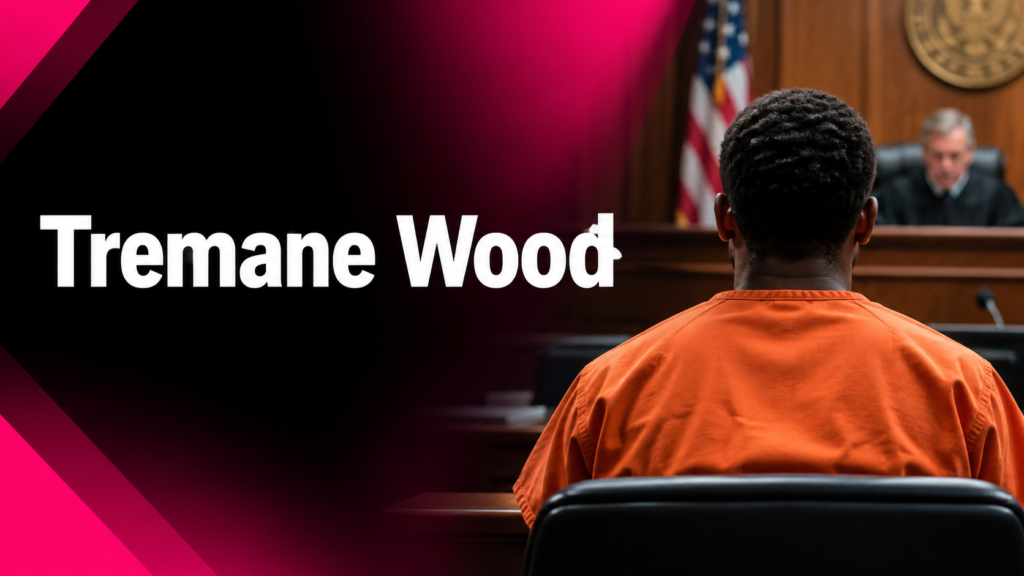

Minutes before a scheduled lethal injection in November 2025, Oklahoma Governor Kevin Stitt intervened in a case that had drawn national scrutiny for more than two decades. Tremane Wood faced execution for a 2002 killing his brother had long confessed to committing. The decision to commute the death sentence to life without parole highlighted deep questions about fairness, the felony murder rule, and how two brothers received sharply different outcomes for the same crime.
This article examines the legal history, trial issues, appellate path, and recent developments in the Tremane Wood Oklahoma case. It aims to inform legal advocates, criminal justice reform supporters, and readers following high-profile capital punishment matters about the complexities of evidence, co-defendant sentencing, and clemency processes.
The Crime and Initial Investigation
On New Year’s Eve 2001 into January 1, 2002, 19-year-old Ronnie Wipf and his friend Arnold Kleinsasser were in Oklahoma City. Both were migrant farm workers from Montana’s Hutterite community, traveling for harvest work. They met two women at a brewery. The women later lured the men to a motel room under the pretense of prostitution.
Two masked men then entered the room. One carried a gun and the other a knife. A struggle followed. Kleinsasser escaped after a gunshot rang out and later hid for hours. Wipf died from a single stab wound to the chest.
Prosecutors charged Tremane Wood, then 22, his older brother Zjaiton “Jake” Wood, and the two women. The case rested on Oklahoma’s felony murder statute. Under that rule, participants in a qualifying felony can face murder charges if a death occurs during the crime, even without proof that a specific person intended or delivered the fatal blow.
Evidence placed both brothers at the scene with masks, trench coats, and gloves. Witness accounts and physical evidence supported the robbery-murder framework. The surviving victim could not identify who stabbed Wipf because of the masks and chaos.
Key facts of the offense included the second robbery attempt that night, the use of weapons, and the rapid escalation from robbery to fatal violence. These details formed the foundation for the state’s case against all participants.
Trial, Conviction, and Sentencing Disparity
Tremane Wood’s trial took place in Oklahoma County in 2004. A jury convicted him of first-degree felony murder, robbery with firearms, and conspiracy. The jury found aggravating factors: that he knowingly created a great risk of death to more than one person, that the murder was especially heinous, atrocious, or cruel, and that he posed a continuing threat to society. The jury recommended death. The trial judge imposed that sentence along with consecutive life terms on the other counts.
Jake Wood testified at Tremane’s trial. He claimed he alone stabbed Wipf and that Tremane was not even in the room at the critical moment. Prosecutors still argued Tremane held the knife. At Jake’s later trial, the state presented a different emphasis on who delivered the fatal wound. Jake received life without parole. He died by suicide in prison in 2019.
The two women received lengthy sentences as well. One key prosecution witness, who had a prior relationship with Tremane, received a reduced term after testifying and was later released after serving roughly a dozen years.
This co-defendant sentencing outcome became central to criticism of the case. One brother confessed to the killing and received life. The other received death under the same felony murder framework. The disparity raised questions about prosecutorial discretion, the quality of representation, and consistency in capital cases.
Representation Differences
Jake Wood received a team of experienced capital defenders from the Oklahoma Indigent Defense System, including multiple attorneys and investigators. Tremane received court-appointed counsel John Albert (sometimes referenced as Johnny Albert). Albert handled a large caseload, including other capital matters at the same time. He later acknowledged limited preparation, infrequent client contact, and personal struggles with alcohol and substance use. His law license was suspended for a period after multiple client grievances. Two other capital clients he represented around the same period later obtained relief based on ineffective assistance claims.
Albert billed very little out-of-court time on Tremane’s case and did not use an investigator in the way capital defense standards typically require. Mitigation evidence about Tremane’s background received limited development at trial.
These differences illustrate how resources and attorney performance can shape outcomes even when defendants face related charges arising from the same events.
Ineffective Assistance Claims and Appellate Litigation
Tremane Wood’s direct appeal reached the Oklahoma Court of Criminal Appeals, which affirmed the conviction and sentence in 2007. Post-conviction proceedings and federal habeas corpus litigation followed for years. Claims focused on ineffective assistance of counsel under the Strickland standard: deficient performance that prejudiced the defense.
Courts examined Albert’s substance issues, limited investigation, and failure to present fuller mitigation. Federal courts applied the deferential standards required by the Antiterrorism and Effective Death Penalty Act. Relief was denied. Additional evidence later emerged about the timing and extent of Albert’s substance use, including affidavits from former clients. Courts largely treated later claims as procedurally barred or insufficient to overcome prior findings.
Other issues included alleged nondisclosure of benefits provided to a key witness (raising Brady concerns) and questions about racial dynamics. Tremane is bi-racial. The victim was white. The jury was nearly all white. The sole Black juror, who served as foreperson, later stated she felt pressured to join the death verdict. The trial judge faced separate criticism over reported remarks about people of color.
Appellate courts rejected these claims for relief. The U.S. Supreme Court declined multiple opportunities to intervene, including a final stay request on the morning of the scheduled execution.
Appellate litigation in capital cases often stretches across decades. It tests both the reliability of the original verdict and the fairness of the process that produced it. In this matter, the record showed persistent disputes over counsel performance, witness deals, and the application of the felony murder rule in a death-eligible context.
The Felony Murder Rule and Broader Policy Questions
Oklahoma’s felony murder statute allows a first-degree murder conviction when a death occurs during certain felonies, such as robbery with a firearm. Prosecutors need not prove specific intent to kill for every participant. This doctrine can produce convictions for non-triggermen or non-stabbers.
Critics of the rule argue it expands liability beyond moral culpability and can lead to disproportionate sentences, especially when combined with capital eligibility. Supporters contend it deters dangerous felonies and holds all participants accountable when violence escalates.
In Tremane Wood’s case, the rule meant the state did not have to prove beyond a reasonable doubt that he personally delivered the fatal stab. The sentencing disparity with his brother amplified the debate. Reform discussions in Oklahoma have included proposals to reclassify certain felony murder cases as second-degree murder, removing the death penalty option. Such changes face significant political hurdles.
The case also intersects with prosecutorial discretion. Different presentations of the same facts at sequential trials for co-defendants can shape jury perceptions. When one defendant receives robust representation and another does not, the risk of unequal justice increases.
National data from sources such as the Death Penalty Information Center show that felony murder cases continue to generate controversy in death penalty states. Oklahoma has carried out numerous executions in recent years while also seeing occasional clemency grants.
Clemency Process and the November 2025 Decision
In the months before the scheduled execution date of November 13, 2025, attention intensified. The Oklahoma Pardon and Parole Board held a hearing. Tremane Wood spoke by video, acknowledging his role in the robbery, expressing regret that he did not stop the events, and maintaining that his brother inflicted the fatal wound.
The board voted 3-2 to recommend commutation to life without parole. Members cited concerns about the quality of trial representation. The Oklahoma Attorney General’s office opposed the recommendation and presented information about alleged prison misconduct, including contraband activity and involvement in an inmate assault.
Victim perspectives mattered. Ronnie Wipf’s mother and the surviving victim, Arnold Kleinsasser, publicly opposed the execution, citing religious beliefs centered on forgiveness. Governor Stitt referenced their stance in his eventual decision.
On the morning of the execution, the U.S. Supreme Court denied a stay. Staff notified Wood of the governor’s commutation shortly before the scheduled time. The sentence became life without the possibility of parole. The order specified that further clemency or parole eligibility would not apply.
This legal clemency action marked only the second such grant by Governor Stitt during his tenure. It aligned the punishment with the sentence Jake Wood had received. Supporters of the decision viewed it as a correction of disparity. Opponents argued the original jury verdict should stand and that prison conduct raised ongoing public safety concerns.
Hours after the commutation, Wood was found unresponsive in his cell. Medical evaluation attributed the episode to dehydration and stress after he had not eaten or drunk since the previous evening. He stabilized.
The sequence illustrates how executive clemency can serve as a final safety valve when courts have exhausted review. It also shows the intense pressure surrounding capital cases in the final hours.
Implications for Criminal Justice Reform
The Tremane Wood case touches several reform themes. First is the quality of capital defense. When appointed counsel faces overwhelming caseloads or personal impairment, the adversarial system weakens. Standards for capital representation emphasize investigation, mitigation development, and specialized expertise. Resource disparities between co-defendants can produce unequal results.
Second is the operation of the felony murder rule in death-eligible cases. Holding non-killers equally subject to the ultimate penalty raises proportionality questions that courts and legislatures continue to debate.
Third is the role of sentence commutation and parole boards. These bodies can consider factors courts cannot fully weigh under legal standards: residual doubt about who inflicted the fatal blow, the victim family’s wishes, and the passage of time.
Fourth is transparency around witness deals and discovery. Claims of undisclosed benefits to cooperating witnesses, even if ultimately rejected by courts, erode public confidence when they surface late.
Readers interested in these issues may follow resources from the Death Penalty Information Center for data on capital cases nationwide and the Oklahoma Department of Corrections for official records on sentenced individuals. Legal professionals can examine the published appellate opinions for detailed procedural history.
Unique aspects of this case include the brother’s confession at trial, the later suicide of that co-defendant, the documented struggles of trial counsel, the nearly last-minute nature of the clemency grant, and the public stance of the victim’s family against execution. These elements distinguish it from many other Oklahoma capital punishment cases.
Conclusion
The Tremane Wood Oklahoma case reveals how felony murder liability, unequal defense resources, and sentencing disparity can converge in a capital prosecution. After more than twenty years of litigation, a narrow clemency recommendation and a final executive decision converted a death sentence into life without parole. The outcome does not erase the harm to Ronnie Wipf and his family, nor does it resolve every disputed factual question about the night of the crime.
It does underscore the need for careful scrutiny of capital cases involving co-defendants, the importance of competent counsel, and the continuing policy debate over the felony murder rule. Legal advocates and reform-minded readers should study the full record of this matter. Consult official court opinions, the Death Penalty Information Center, and qualified capital defense practitioners for deeper analysis of similar issues in other jurisdictions.
Frequently Asked Questions
What was Tremane Wood convicted of?
He was convicted of first-degree felony murder, robbery with firearms, and conspiracy for his role in the 2002 motel robbery that resulted in Ronnie Wipf’s death.
Did Tremane Wood’s brother confess to the killing?
Yes. Zjaiton “Jake” Wood testified that he stabbed Wipf and claimed Tremane was not present at the moment of the killing. Jake received life without parole and later died by suicide in prison.
What is the felony murder rule in this context?
It allows a murder conviction when a death occurs during certain felonies such as armed robbery, even if the defendant did not personally kill or intend to kill.
Why did Governor Stitt grant clemency?
He accepted the Pardon and Parole Board’s 3-2 recommendation. His statement noted the decision aligned the sentence with the brother’s and provided severe, permanent punishment while referencing the victim family’s position.
What happened to Tremane Wood’s trial attorney?
John Albert later had his license suspended amid substance use and client neglect issues. Other capital clients of his obtained relief on ineffective assistance grounds. Courts denied similar relief to Wood.
Is Tremane Wood eligible for future release?
No. The commutation is to life without the possibility of parole, with further restrictions on future clemency or parole.
Where can I find official records on the case?
Published opinions appear on the Oklahoma State Courts Network (OSCN). The Death Penalty Information Center maintains case summaries and broader capital punishment data.
You May Also Like: The Murder of Chanin Starbuck: Forensics, Family Division, and Final Verdicts