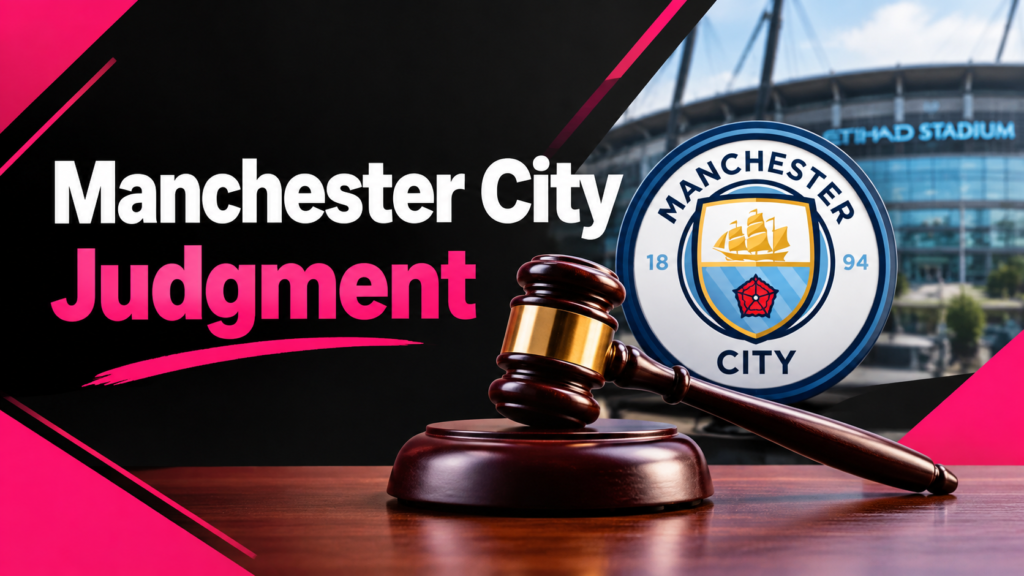

Football rarely sees a regulatory case this large or this long. On 29 September 2026, an independent commission confirmed that Manchester City had been found guilty of all charges related to serious breaches of Premier League financial rules between the 2009-10 and 2017-18 seasons, plus the majority of charges for failing to cooperate with the investigation. The club immediately signalled its intention to fight the findings and lodged a formal appeal on 1 October 2026.
This article breaks down the Manchester City judgment in plain language. You will find the core allegations, the numbers the commission accepted, the appeal process and timeline, possible sanctions, and the wider implications for financial fair play, associated party transactions, and Premier League governance. The goal is simple: give football fans, legal analysts, and interested supporters a clear, factual picture of where the case stands and what happens next.
Background: How the Charges Began
The roots of the case stretch back years. In 2018, leaked emails published by Der Spiegel raised questions about how Manchester City recorded certain sponsorship deals after Sheikh Mansour’s 2008 takeover. UEFA opened its own investigation and initially imposed a two-year European ban and a large fine. The Court of Arbitration for Sport later overturned most of those findings, reducing the fine and ruling that key breaches were either not proven or time-barred.
The Premier League continued its own inquiry. On 6 February 2023 it charged the club with 115 alleged breaches of its rules. The charges covered:
- Accuracy of financial information submitted to the league and UEFA
- Compliance with Profitability and Sustainability Rules (the Premier League’s version of spending limits)
- Compliance with UEFA’s Club Licensing and Financial Fair Play rules
- Duties of cooperation and utmost good faith during the investigation
The substantive hearing ran for 42 days between September and December 2024. Twenty-seven witnesses gave evidence. Millions of pages of documents and thousands of pages of transcripts were reviewed. The independent three-person commission took nearly two years to produce its core decision, which was published in redacted form on 29 September 2026.
What the Independent Commission Found
The commission upheld every charge related to serious financial rule breaches. It also upheld three of the four non-cooperation charges. Only one charge (a specific non-cooperation allegation) was not proven.
At the heart of the decision sits what the commission called a disguised funding scheme. Between 2009-10 and 2017-18, Manchester City recorded £949.94 million in commercial revenue from Abu Dhabi-linked sponsors. The commission found that the sponsors themselves paid only £119.25 million in “base fees.” The remaining £830.69 million came from Abu Dhabi United Group (ADUG), the club’s owner at the time, and was recorded as sponsorship income rather than equity contributions.
The commission described a series of sham contracts and agreements. Sponsors were required to pay only part of the contractual fees; the balance was supplied by the owner and presented as commercial revenue. Additional arrangements reduced reported costs, including a third-party image-rights structure known as the Fordham Arrangement, which the commission characterised as little more than a front for ADUG funding. Together, the schemes artificially inflated revenues and reduced costs by more than £900 million.
The practical effect, according to the findings, was that the club’s accounts did not give a true and fair view of its financial position. Had the figures been reported accurately, Manchester City would have breached both Premier League and UEFA spending limits by substantial margins. The commission concluded that the club “clearly intended to circumvent the PL Rules.”
The decision also found that Manchester City made concerted efforts to frustrate the Premier League investigation, resulting in the upheld non-cooperation charges.
Manchester City’s Response and the Appeal
Manchester City has denied wrongdoing throughout. In its statement after the core decision was published, the club said it was “disappointed and surprised” by the opinion and maintained its innocence. On 1 October 2026 it lodged a comprehensive appeal, stating that the opinion “contains clear material errors, of law, principle and fact and is unsafe.” The club asserts that a “comprehensive body of irrefutable evidence” supports its positions.
Reports indicate the appeal will focus on contemporaneous bank statements, government records, receipts, and witness testimony that the club believes show the funding originated from the Abu Dhabi government rather than being disguised owner equity. City’s legal team is expected to argue that the original commission applied the wrong legal tests and dismissed key evidence.
An appeal under Premier League rules is not a full re-hearing. A new three-person Appeal Board reviews the decision for material errors of law, principle, or fact. The hearing itself is limited to a maximum of five days.
Appeal Timeline
Under current Premier League regulations, the appeal process must be concluded within 12 weeks of the appeal being lodged. That sets a deadline around 24 December 2026. The Appeal Board then has 30 days from the final day of the hearing to deliver its verdict. Depending on scheduling and the Christmas period, a decision is widely expected between mid-January and early March 2027.
Some observers note that City may argue the accelerated appeal rules (introduced after the original charges) should not apply retroactively. Even if the appeal is dismissed, further steps remain possible, including arbitration and, ultimately, a High Court challenge. Legal experts caution that final resolution could still take considerable time.
Possible Sanctions if the Verdict Stands
If the appeal fails, the original independent commission will decide sanctions. The Premier League Handbook (Section W) allows a wide range of penalties:
- Unlimited fine
- Points deduction (immediate or suspended)
- Transfer restrictions or bans
- Stripping of titles won during the relevant period
- Expulsion from the Premier League (which would require a vote of the other clubs)
There is no fixed timetable for the sanctions hearing. Some reports suggest it could run in parallel with the appeal; others expect it to wait until the liability findings are final. Both sides would have the right to appeal any sanctions decision.
The scale of the alleged breaches means any punishment is likely to be significant. At the same time, the age of the conduct (ending in 2017-18) and the club’s subsequent on-pitch success create practical and legal complications that the commission will have to weigh.
Wider Context: APT Rules and Football Governance
The main 115-charge case sits alongside a separate 2024 arbitration on associated party transactions (APT). In that dispute, an independent panel found that certain Premier League APT rules breached competition law, particularly the exclusion of shareholder loans and aspects of the fair-market-value assessment process. Both sides claimed aspects of victory. The APT ruling does not overturn the financial-charges decision, but it forms part of the broader legal landscape around how owner-related commercial deals are regulated.
The Manchester City judgment also lands at a moment when English football is introducing a new Independent Football Regulator. The regulator has indicated it is monitoring the process and expects greater clarity in the early part of 2027. UEFA is likewise watching and has said it will wait until the Premier League process concludes before deciding whether any further action is required under its own rules.
For other clubs, the case raises practical questions. How strictly will financial rules and related-party disclosures be enforced going forward? What level of documentary proof will be required for large sponsorships involving entities linked to owners? The answers will shape contract drafting, accounting practices, and regulatory strategy across the league.
What the Judgment Means for Fans and the Game
For Manchester City supporters, the verdict is a serious challenge to the narrative of the club’s rise under its current ownership. For rival fans, it is validation of long-standing concerns about competitive balance. For neutral observers and legal analysts, it is a stress test of Premier League self-regulation and the effectiveness of independent commissions in complex, high-stakes sports-law cases.
The commission’s core findings are now public (in redacted form). The appeal will test whether those findings withstand scrutiny. Until the appeal board rules, the liability decision remains subject to challenge. Sanctions, if any, remain unknown. Title history, league position, and European participation are all still formally intact.
The process has already taken years. Further legal steps could extend it. In the meantime, the club continues to compete, and the rest of the Premier League continues to operate under the same financial framework that is now under intense examination.
Key Takeaways
The independent commission found Manchester City guilty of operating a disguised funding scheme that inflated revenues and reduced costs by more than £900 million between 2009 and 2018, primarily by recording owner funding as commercial sponsorship. The club has appealed, arguing material errors and pointing to what it calls irrefutable evidence. The appeal must conclude within 12 weeks of 1 October 2026, with a decision expected in early 2027. Sanctions, if the verdict is upheld, could range from fines and points deductions to more severe sporting penalties. The case will influence how club ownership regulations, associated party transactions, and financial reporting are applied across English football for years to come.
Stay informed through official Premier League statements and reliable sports-law reporting as the appeal progresses.
Frequently Asked Questions
What exactly did the independent commission decide in the Manchester City judgment?
It found the club guilty of all charges relating to serious breaches of Premier League financial rules over nine seasons and of the majority of charges for failing to cooperate with the investigation. Only one non-cooperation charge was not proven.
How much money was involved in the disguised funding scheme?
The commission calculated that of £949.94 million recorded as Abu Dhabi sponsorship revenue, only £119.25 million was paid by the sponsors. The remaining £830.69 million came from the owner and was treated as commercial income. Additional cost reductions brought the total distortion above £900 million.
When will the appeal be decided?
The appeal was lodged on 1 October 2026. Under current rules it must be concluded within 12 weeks (around late December 2026). The Appeal Board then has 30 days to issue its decision, pointing to a possible January or February 2027 outcome.
Can Manchester City still be stripped of titles?
Title stripping is one of the sanctions available if the liability findings are upheld. No sanctions have yet been imposed, and any decision would itself be subject to appeal.
What is the difference between this case and the earlier UEFA case?
UEFA’s earlier findings were largely overturned by the Court of Arbitration for Sport on evidential and time-bar grounds. The Premier League investigation produced additional evidence and different legal conclusions under its own rules.
Will UEFA take further action?
UEFA has said it is monitoring the Premier League process and will decide whether to act only after that process is complete.
Does the APT arbitration affect the main judgment?
The 2024 APT ruling found certain Premier League associated-party rules breached competition law in specific respects. It does not overturn the financial-charges findings, but it forms part of the wider regulatory context.
You May Also Like: Roberts Halts Immigration Judges Ruling: Key Insights and Next Legal Steps