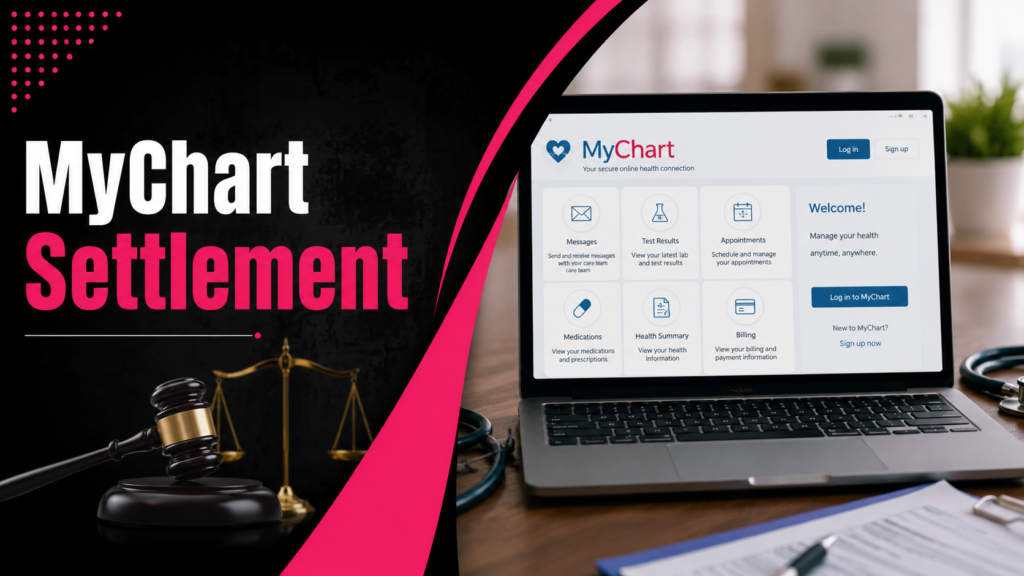

Multiple healthcare systems that use the MyChart patient portal have reached or proposed class action settlements in 2026 resolving claims that tracking technologies on their websites and portals transmitted patient information to third parties without adequate consent. There is no single nationwide MyChart settlement. Instead, separate cases against individual providers offer cash payments, privacy monitoring, or both to eligible users. This article explains the background, key legal issues, current status of major matters, who may be affected, the typical claim process, and what readers should monitor.
This article is for informational purposes only and does not constitute legal advice. Eligibility, deadlines, and benefits vary by case. Individuals should consult official settlement websites or an attorney for their specific situation.
Background & Legal Context
MyChart is a widely used patient portal platform developed by Epic Systems Corporation. Hospitals and health systems customize and host instances of MyChart for patients to view records, schedule appointments, message providers, and manage care. Beginning around 2022, investigative reporting and subsequent lawsuits highlighted the presence of third-party tracking tools, commonly called pixels (including the Meta Pixel and similar technologies from Google and others), on many hospital websites and patient portals.
Plaintiffs in these cases generally allege that the pixels captured details of user activity on MyChart or related web pages (such as page views, searches for conditions or providers, appointment information, or other interactions) and transmitted that data to advertising and analytics companies. When linked with other identifiers, the data could reveal sensitive health-related information. Claims typically invoke state privacy statutes, consumer protection laws, and theories of invasion of privacy or unjust enrichment. Federal HIPAA rules protect health information but generally do not create a private right of action for individuals, so most cases rely on state law.
Defendants, including the health systems, have consistently denied wrongdoing or liability. They often argue that any tracking was limited, that patients consented through website terms or privacy policies, that no protected health information was improperly disclosed, or that the tools served legitimate operational purposes. Settlements resolve the litigation without any admission of liability and without a trial on the merits.
Courts have granted preliminary approval in numerous cases, certified settlement classes for settlement purposes only, and ordered notice to potential class members. Final approval hearings and claim administration continue through 2026 for several matters. Related but separate litigation has targeted data breaches at some of the same systems; those cases involve different class definitions, benefits, and websites.
Key Legal Issues Explained
At the core of these disputes is the question of consent and the scope of data collection on authenticated or semi-authenticated patient portals. Tracking pixels function by embedding code that sends information about a user’s browser activity to a third-party server. On a public marketing page the practice is common. On a password-protected portal containing medical records, plaintiffs contend the same practice can reveal highly sensitive details without meaningful notice or choice.
Relevant legal concepts include:
- State privacy and consumer protection statutes that prohibit unfair or deceptive practices or the interception of electronic communications without consent.
- Theories of invasion of privacy based on the highly personal nature of health data.
- Contractual claims tied to privacy policies or terms of use that allegedly promised greater protection.
- Questions about whether website banners, cookie notices, or terms of service provided valid consent under applicable law.
Courts evaluating proposed settlements examine whether the relief is fair, reasonable, and adequate under Federal Rule of Civil Procedure 23 (or state equivalents), the strength of the claims and defenses, the risks and costs of continued litigation, and the reaction of the class. Settlements commonly include a common fund or fixed per-claimant payments, release of claims against the settling defendant, and sometimes prospective changes in tracking practices (though many agreements focus primarily on monetary and monitoring relief).
Individual payouts are often modest because class sizes can number in the hundreds of thousands and because administrative costs, notice expenses, attorneys’ fees (subject to court approval, frequently capped around one-third of the fund), and service awards to named plaintiffs are deducted first. Fixed-amount settlements (for example, $25 or $50) provide greater certainty; pro rata funds produce payments that depend on the number of valid claims filed.
Latest Developments or Case Status
As of late July 2026, several MyChart-related pixel settlements remain active or recently approved for claims. Key examples include:
Bayhealth Medical Center (Delaware). A proposed settlement covers individuals who used certain Bayhealth web properties, including pages linking to or the MyChart patient portal itself, between January 1, 2019, and December 31, 2025. Eligible class members who submit a valid claim may receive a one-time $25 cash payment and may elect one year of CyEx Privacy Shield (dark web scanning, password tools, VPN, and fraud resolution support). Claims must be submitted online or postmarked by October 5, 2026. A final approval hearing is scheduled for October 29, 2026. The official website is BayhealthPixelSettlement.com.
St. Joseph Hospital of Nashua, N.H. Individuals who used a MyChart patient portal account associated with St. Joseph from January 1, 2023, through the applicable period may claim a $50 payment. The claim deadline is August 14, 2026. Opt-out and objection deadlines were July 30, 2026. A final approval hearing is set for September 2026. The settlement website is stjosephpixelsettlement.com.
Memorial Health Services. The settlement resolves claims concerning the MyChart portal for individuals who logged in between March 7, 2022, and July 8, 2022. The fund is $750,000. Payments are pro rata after deductions. Claimants generally need the unique Login ID and PIN from their notice. The claim and opt-out deadline is August 21, 2026, with a final approval hearing on September 17, 2026. The website is MHSpixelsettlement.com (or MHSPixelSettlement.com).
Duke University Health System. U.S. residents whom Duke identified as having logged into the Duke MyChart patient portal or MyDuke Health mobile app at least once between February 18, 2019, and June 17, 2022, may claim a pro rata share of a $3,743,600 settlement fund after fees, costs, and a service award. Claims are due by August 16, 2026. The final approval hearing is August 27, 2026. The official site is duhssettlement.com.
Wellstar Health System. A proposed $4.25 million settlement covers roughly 870,000 individuals whose data was allegedly collected via tracking tools on the website and MyChart portal from approximately February 2020 through July 22, 2026. The agreement requires final court approval. Once approved, class members will have a limited window (reported as 75 days in some coverage) to file claims. Individual amounts are expected to be small if claim rates are high. Wellstar has stated the settlement is not an admission of wrongdoing.
Other matters, including settlements involving Allina Health, Southern Illinois Healthcare, and various California and Midwest systems, have closed claim periods, reached final approval, or remain in earlier stages. Some earlier cases (for example, certain Mount Sinai and BJC HealthCare matters) have already distributed or begun distributing payments. No single consolidated national settlement covering all MyChart users exists.
Who Is Affected & Potential Impact
Affected individuals are generally current or former patients (or in some definitions, any users) of a specific health system’s MyChart portal or related web properties during a defined class period. Class membership is typically determined by the defendant’s records of portal logins or website activity. Notices are usually mailed or emailed to identified class members and contain a unique identifier or PIN required for online claims in many cases.
Consumers who used multiple health systems may be eligible for more than one settlement. Businesses and institutions that rely on Epic/MyChart infrastructure face ongoing compliance and reputational considerations regarding third-party tracking tools. Regulators and privacy advocates continue to scrutinize the intersection of digital advertising technology and healthcare data.
Possible outcomes for class members who file valid claims include modest cash payments (fixed or pro rata), complementary privacy monitoring services, and a release of claims against the settling defendant. Those who opt out preserve the right to pursue individual litigation but forgo settlement benefits. Doing nothing typically results in being bound by the settlement and releasing claims without receiving payment.
What This Means Going Forward
These settlements reflect a broader judicial and regulatory focus on the use of tracking technologies in sensitive contexts. Health systems have incentives to audit and, where necessary, remove or reconfigure third-party code on authenticated portals. Patients gain limited financial recovery and heightened awareness of data practices. The cases also illustrate the practical realities of class action resolution: large classes, significant administrative costs, and individual recoveries that are often measured in tens of dollars rather than thousands.
Readers should monitor official court dockets and settlement websites for their specific providers, watch for mailed or emailed notices, and note claim deadlines carefully. Future litigation may target remaining systems or evolve toward different legal theories as technology and regulatory guidance change. Epic Systems itself has generally maintained that hospitals control the addition of third-party tracking tools and that the core MyChart platform does not include them by default.
Conclusion
The MyChart-related settlements of 2026 address allegations that tracking pixels on patient portals shared sensitive information with third parties. While individual recoveries are typically modest and vary by case, the proceedings provide a practical mechanism for compensation and underscore the importance of careful data practices in healthcare. Eligibility, claim deadlines, and benefits are provider-specific. Affected individuals should review official notices and settlement websites promptly, submit timely claims where appropriate, and stay informed of final approval and distribution timelines. Public interest in the intersection of digital advertising technology and medical privacy remains high, and further developments are likely as additional cases move through the courts.
Frequently Asked Questions
Is there one MyChart settlement that covers all users?
No. Each settlement is specific to a particular health system or hospital and a defined class period and set of web properties. Check the provider you used.
How do I know if I am eligible?
Eligibility depends on whether you used the specific provider’s MyChart portal or covered web pages during the class period listed in that settlement’s notice or website. Many cases rely on the defendant’s own records of logins.
What is the typical claim process?
Most settlements require submission of a claim form online (preferred) or by mail by a firm deadline. Online claims often require a unique ID or PIN printed on the official notice. No medical records or proof of injury is usually required for the basic cash benefit. Select a payment method (check, PayPal, Venmo, Zelle, or similar) when available.
When will payments be issued?
Payments generally occur after the court grants final approval and any appeals are resolved. This can take weeks to many months after the claim deadline. Settlement administrators provide updates on the official websites.
Do I need a lawyer to file a claim?
No. The claim process is designed for individuals to complete without counsel. Class counsel represents the class as a whole. Individuals with unique circumstances may consult their own attorney.
What if I never received a notice?
Visit the official settlement website for the relevant provider, contact the settlement administrator using the published phone number or email, or search for the case name and number on the court docket. Some administrators can verify eligibility without the original notice.
You May Also Like: Camp Lejeune Lawsuit: Current Case Status and Settlement Progress