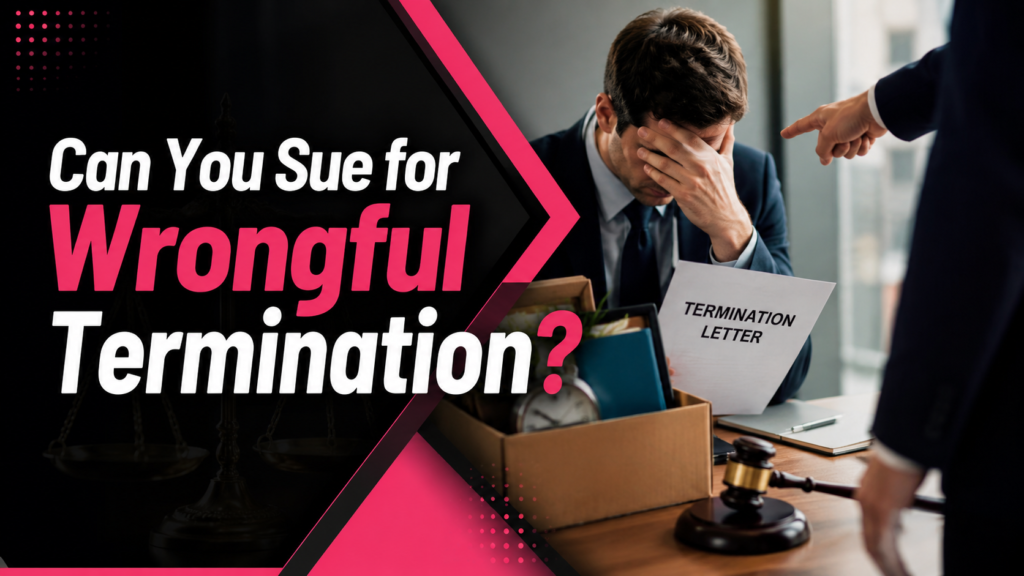

Losing a job often feels personal and unfair. You may have given years of solid work only to receive a sudden pink slip with little explanation. Many workers in that moment wonder the same thing: can you sue for wrongful termination? The short answer is sometimes yes, but only when the firing crosses a clear legal line.
This guide walks you through the real legal landscape. It explains the difference between a harsh but legal dismissal and an illegal one. You will learn how at-will employment works, the main exceptions that protect you, how to evaluate your own situation, and the practical next steps if you believe your rights were violated. The goal is simple: give you clear, grounded information so you can decide whether to pursue a claim and how to protect yourself along the way.
What Is Wrongful Termination?
Wrongful termination means your employer fired you for an illegal reason. It is not the same as being treated unfairly or let go without warning. In most of the United States, employers can end the relationship for almost any reason or no reason at all. The law steps in only when the reason itself violates a statute, a contract, or a strong public policy.
Common illegal reasons include firing someone because of their race, sex, age, disability, religion, or national origin. It also covers retaliation for reporting discrimination, safety violations, or other protected activities. Breach of a written or implied employment contract can also support a claim. Purely subjective unfairness, personality conflicts, or ordinary performance issues usually do not qualify.
Think of it this way. If your boss fires you because the company is cutting costs, that is generally legal. If your boss fires you the week after you report sexual harassment, that timing may point to an illegal motive. Courts look at the real reason behind the decision, not the polite explanation written in the termination letter.
Understanding At-Will Employment
Nearly every state follows the at-will employment rule. Under this doctrine, either you or your employer can end the job at any time, with or without notice, and with or without cause. Montana is the main exception. After a short probationary period there, employers generally need good cause to fire someone.
At-will status does not give employers unlimited power. Federal and state laws create important limits. Those limits form the foundation of most wrongful termination claims. Even without a formal contract, certain protections still apply.
Many workers assume that a lack of written agreement means they have no rights. That is not accurate. You can still sue for wrongful termination without a contract when the firing violates anti-discrimination laws, retaliation rules, or public policy. The at-will label simply means the employer does not need a good business reason. It never means the employer can act for an illegal one.
Key Exceptions to At-Will Employment
Several well-established exceptions open the door to legal action. These exceptions vary by state in their details, but the core categories appear nationwide.
Workplace Discrimination
Federal law makes it illegal to fire someone because of a protected characteristic. Title VII of the Civil Rights Act covers race, color, religion, sex (including pregnancy, sexual orientation, and gender identity), and national origin. The Americans with Disabilities Act (ADA) protects qualified workers with disabilities. The Age Discrimination in Employment Act (ADEA) protects those age 40 and older. The Genetic Information Nondiscrimination Act adds further safeguards.
Many states expand these protections. Some cover marital status, political affiliation, or other categories. If your employer treated you differently than similarly situated coworkers outside your protected group, and then fired you, discrimination may be the real driver.
Example: A long-time sales manager in her mid-50s receives excellent reviews for years. After a new younger supervisor arrives, she is suddenly placed on a performance improvement plan and terminated while younger colleagues with weaker numbers keep their jobs. That pattern can support an age discrimination claim.
Retaliation and Whistleblower Protection
Retaliation claims rank among the most common charges filed with the Equal Employment Opportunity Commission (EEOC). It is illegal to fire someone for engaging in protected activity. Protected activities include complaining about discrimination or harassment, requesting a reasonable accommodation, taking Family and Medical Leave Act (FMLA) leave, filing a workers’ compensation claim, or reporting safety violations.
Whistleblower laws add another layer. Federal statutes protect workers who report certain types of illegal conduct, such as securities fraud, environmental violations, or workplace safety hazards. Many states have their own whistleblower statutes as well.
Timing often matters. Courts pay close attention when an adverse action follows closely after protected activity. A firing two weeks after an internal complaint about racial harassment raises more suspicion than a firing two years later.
Breach of Employment Contract and Implied Contracts
If you signed a written employment contract that limits the reasons for termination or requires progressive discipline, firing you outside those terms can be a breach. Even without a formal contract, some states recognize implied contracts. These can arise from employee handbook language that promises job security or from consistent oral assurances by managers.
Handbooks often contain disclaimers stating that employment remains at-will. Courts still examine the overall context. Progressive discipline policies, long service, and repeated promises of continued employment can sometimes create enforceable expectations.
Public Policy Exceptions
Most states recognize a public policy exception. Employers cannot fire workers for reasons that undermine clear public interests. Common examples include refusing to commit an illegal act, serving on a jury, voting, performing military service, or reporting illegal activity that harms the public.
A handful of states do not fully adopt this exception. Always check the specific rules where you worked. Even in those states, federal statutes may still provide protection for certain activities.
How to Prove Wrongful Termination
Proving a claim requires evidence that the illegal reason motivated the decision. Direct evidence, such as an email stating “we need to replace the older workers,” is rare and powerful. Most cases rely on circumstantial evidence.
Useful evidence includes:
- Performance reviews showing strong work before the protected activity or protected characteristic became an issue
- Emails, texts, or meeting notes that reveal bias or sudden shifts in treatment
- Comparative data showing how similarly situated employees outside your group were treated
- Timing between your protected activity and the termination
- Inconsistent explanations offered by the employer
- Witness statements from coworkers who observed discriminatory comments or unequal treatment
Document everything as soon as possible. Save copies of reviews, communications, and the termination notice. Write down dates, names, and details while they remain fresh. Do not rely solely on company systems that may restrict your access after you leave.
Courts use a burden-shifting framework in many discrimination and retaliation cases. You first present evidence that raises an inference of illegal motive. The employer then offers a legitimate reason. You respond by showing that reason is pretext, meaning it is false or not the real driving factor.
Steps to Take If You Suspect Wrongful Termination
Act quickly. Deadlines are strict and evidence disappears.
- Review your termination documents and any severance offer carefully. Do not sign a release of claims without understanding the consequences.
- Gather and organize your records: reviews, emails, pay stubs, handbook, medical notes if relevant, and a timeline of key events.
- Consider filing an internal complaint if the company still has an open process, but do not let internal steps delay external deadlines.
- Contact the EEOC or your state fair employment agency. You can start online through the EEOC Public Portal.
- Speak with an employment lawyer experienced in wrongful termination cases. Many offer free or low-cost initial consultations and work on contingency.
- Preserve social media and avoid public statements that could be used against you.
For discrimination and most retaliation claims under federal law, you must usually file a charge with the EEOC before suing in court. See the official guidance on how to file a charge of employment discrimination. State agencies often have work-sharing agreements that allow cross-filing.
You can also review government resources on wrongful termination at USA.gov.
Statute of Limitations and Filing Deadlines
Time limits are unforgiving. For most federal discrimination claims, you must file an EEOC charge within 180 calendar days of the discriminatory act. That period extends to 300 days in states that have their own anti-discrimination agency covering the same issue. The clock usually starts on the date of termination.
After the EEOC processes your charge (or earlier if you request it), you receive a Notice of Right to Sue. You then have only 90 days to file a lawsuit in federal court. Missing that window typically ends the federal claim.
State law claims may carry different deadlines, sometimes longer or shorter. Contract claims often follow general contract statutes of limitations. Always confirm the exact rules for your location and claim type. Filing early protects more options.
What Compensation Can You Expect?
Successful claims can recover several types of damages. Back pay covers lost wages and benefits from the date of termination until the case resolves. Front pay may compensate for future losses if reinstatement is not practical. Compensatory damages address emotional distress and other non-economic harm. In some cases, punitive damages punish particularly egregious conduct.
Federal law caps compensatory and punitive damages under Title VII and the ADA based on employer size: $50,000 for smaller employers up to $300,000 for the largest. Back pay and front pay sit outside those caps. Some state laws impose no similar caps. Age claims under the ADEA generally do not allow compensatory or punitive damages but may allow liquidated damages for willful violations.
Settlements vary widely. Survey data shows claimants with attorneys often recover more than those without. Many cases resolve through EEOC mediation or private negotiation long before trial. Outcomes depend on the strength of the evidence, the employer’s size, the specific claims, and local jury tendencies. No one can guarantee a particular payout.
Common Pitfalls to Avoid
Several mistakes weaken otherwise viable claims.
Signing a severance agreement that releases all claims without reviewing it carefully can bar later lawsuits. Accepting a small payment in exchange for a broad release often ends your options.
Waiting too long to act allows deadlines to expire and memories to fade. Delaying evidence collection makes it harder to reconstruct what happened.
Publicly posting angry comments about the employer on social media can create problems for your case and for future job searches.
Assuming that “unfair” equals “illegal” leads to disappointment. Focus on whether a protected characteristic or activity played a role.
Going it alone when the case involves complex evidence or multiple legal theories usually reduces the chance of recovery. Experienced counsel understands the procedural requirements and negotiation dynamics.
Conclusion
Not every painful firing is illegal, but the law does protect workers from discrimination, retaliation, contract breaches, and certain public policy violations. Understanding at-will employment and its exceptions helps you evaluate whether you may have a claim. Document your experience carefully, respect the strict filing deadlines, and seek professional guidance early.
If you believe your termination crossed a legal line, consult a qualified employment attorney to review the specific facts of your case. An experienced lawyer can assess the strength of your evidence, explain the realistic options, and help you decide the best path forward. Taking informed action protects both your rights and your future.
Frequently Asked Questions
Can you sue for wrongful termination in an at-will state?
Yes. At-will status does not allow employers to fire workers for illegal reasons such as discrimination or retaliation. The same core protections apply in every state.
Can you sue for wrongful termination without a contract?
Yes. Most successful claims rest on statutory protections against discrimination and retaliation rather than written contracts. Implied contracts and public policy claims may also apply depending on the state.
How do I prove wrongful termination?
You need evidence that an illegal reason motivated the decision. Performance records, comparative treatment of other employees, timing relative to protected activity, inconsistent employer explanations, and witness accounts all help establish the link.
What is the timeline to sue for wrongful termination?
File an EEOC charge within 180 or 300 days of the termination for most federal discrimination claims. After receiving a right-to-sue notice, you generally have 90 days to file in court. State claims may follow different clocks.
What is the average payout for a wrongful termination lawsuit?
Outcomes vary widely. Survey data indicates higher average recoveries when claimants have legal representation. Federal damage caps limit certain categories of relief based on employer size. Strong evidence and clear causation improve results.
Does workplace harassment support a wrongful termination claim?
Yes, if the harassment was based on a protected characteristic and the employer fired you for complaining about it, or if the harassment was so severe that it forced you to resign (constructive discharge).
Should I accept a severance agreement after being fired?
Review any agreement carefully before signing. Severance packages often require you to release all claims. An attorney can help you evaluate whether the offer fairly compensates you for potential legal rights you would give up.
You May Also Like: California Break Laws for Employees: A Complete Guide