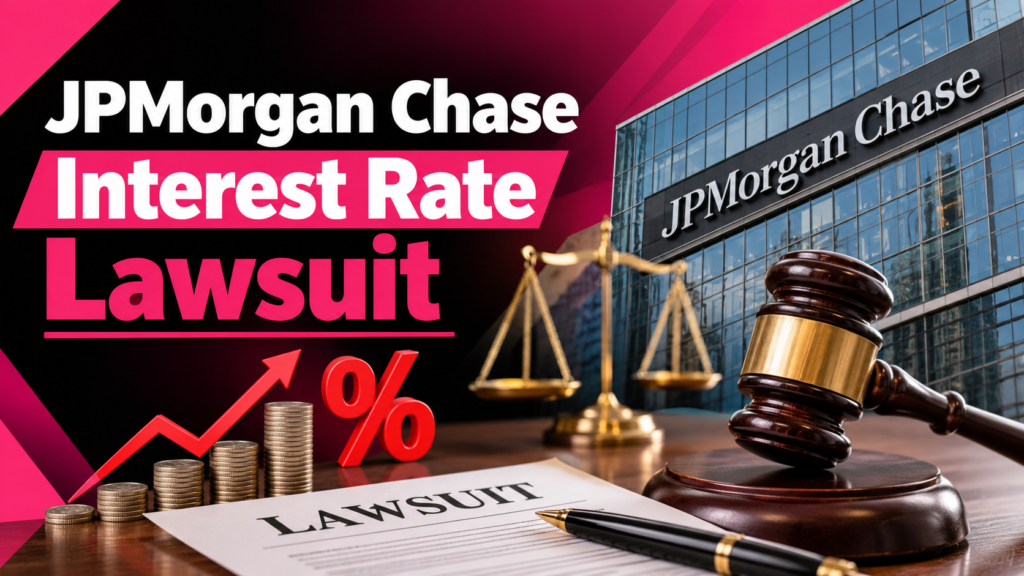

Overview of the JPMorgan Chase Interest Rate Lawsuit
The JPMorgan Chase Interest Rate Lawsuit centers on allegations that JPMorgan Chase & Co. and its affiliates, including J.P. Morgan Securities LLC and JPMorgan Chase Bank, N.A., paid artificially low interest rates on uninvested cash balances held in brokerage and retirement accounts through the bank’s “cash sweep” programs. Customers claim these programs automatically transferred idle cash into deposit accounts offering rates as low as 0.01% to 0.03%, even as prevailing market rates, including the federal funds rate, exceeded 5% during periods of elevated interest rates.
This proposed class action, filed in the United States District Court for the Southern District of New York, alleges breaches of contract under deposit account agreements and individual retirement account (IRA) terms. In a February 2026 ruling, U.S. District Judge Lorna Schofield allowed key breach of contract claims to proceed while dismissing fiduciary duty claims.
The case highlights broader tensions between financial institutions’ practices for managing customer cash and their contractual or regulatory obligations to provide competitive returns, especially in environments of rising benchmark rates set by the Federal Reserve.
What Are Cash Sweep Programs?
Cash sweep programs are standard features in brokerage and investment accounts. When customers hold uninvested cash (for example, proceeds from stock sales or dividends not immediately reinvested), the brokerage automatically “sweeps” it into interest-bearing accounts, typically at an affiliated bank. This provides some yield while keeping funds accessible and insured, often up to Federal Deposit Insurance Corporation (FDIC) limits.
JPMorgan’s programs, including the J.P. Morgan Chase Deposit Account, transfer such cash by default. Customers may have options to select different sweeps, such as money market funds, but many remain in the default bank deposit sweep.
Key features of these programs include:
- Automatic enrollment for convenience.
- FDIC insurance on bank deposits (subject to limits).
- Liquidity for trading or withdrawals.
- Interest rates that the bank sets based on its internal policies, funding needs, and market conditions.
Critics in the JPMorgan Chase Interest Rate Lawsuit argue that the default rates remained suppressed for extended periods, allowing the bank to earn a significant spread by investing or lending the funds at higher market rates while passing minimal returns to customers.
Details of the Allegations in the JPMorgan Chase Interest Rate Lawsuit
Plaintiffs, including lead figures such as Nancy McNamara in the initial filing, contend that JPMorgan failed to honor promises in its account agreements. Specific claims include:
- Breach of Deposit Account Agreements: The bank allegedly did not adjust interest rates “based on business and economic conditions,” as purportedly required.
- Breach of IRA Agreements: Failure to pay a “reasonable rate” of interest on swept cash.
- Additional claims (some dismissed) involved breach of the implied covenant of good faith and fair dealing, unjust enrichment, and violations of New York General Business Law.
The proposed class covers JPMorgan customers dating back to August 24, 2018. Plaintiffs estimate that the practices affected millions in aggregate interest income across similar programs at large banks.
JPMorgan has maintained that it followed customer instructions for cash placement and that clients could actively manage their sweeps or invest elsewhere if dissatisfied. The bank declined to comment publicly on the ongoing litigation.
This JPMorgan Chase Interest Rate Lawsuit is part of a wave of similar actions against major banks and brokerages filed in 2023–2025, as customers scrutinized low yields amid Federal Reserve rate hikes to combat inflation.
Legal Framework and Regulatory Context
Breach of contract claims in banking disputes rely on interpreting the specific language in account agreements, disclosures, and terms of service. Courts examine whether the bank met express or implied obligations regarding rate adjustments.
Relevant principles include:
- Contract Interpretation: Under common law and the Uniform Commercial Code (where applicable to deposits), agreements are read as a whole. Disclaimers about rates being variable or subject to change can limit claims, but promises of “reasonable” rates or adjustments based on conditions may create enforceable duties.
- Fiduciary Duties: Broker-dealers registered with the Financial Industry Regulatory Authority (FINRA) and the U.S. Securities and Exchange Commission (SEC) owe duties of care and loyalty. However, Judge Schofield ruled that automatic cash sweeps did not constitute investment “recommendations” triggering heightened fiduciary obligations in this context.
- FDIC and Banking Regulations: Bank deposits are subject to oversight by the Office of the Comptroller of the Currency (OCC) and Federal Reserve. Interest rate disclosures fall under Truth in Savings Act (TISA) and Regulation DD, which require clear disclosure of yields but do not mandate competitive rates.
- Class Action Procedures: Under Federal Rule of Civil Procedure 23, plaintiffs must demonstrate commonality, typicality, and adequacy of representation for certification. Motions for class certification in this case are ongoing.
Similar lawsuits against other institutions, such as Wells Fargo and U.S. Bancorp, have seen mixed outcomes, with some narrowed but allowed to proceed.
Impact on Customers: Who Is Affected?
Customers with brokerage accounts, IRAs, or similar investment relationships at J.P. Morgan Securities or affiliated entities who had uninvested cash swept into low-yielding deposit accounts are potentially impacted. This includes retail investors, retirees, and those holding cash for liquidity.
Practical effects:
- Reduced earnings on idle cash during high-rate periods (e.g., 2022–2024).
- Opportunity costs: Funds earning near-zero could have been placed in higher-yielding alternatives like Treasury bills or money market funds.
- For IRA holders, lower returns compound over time, affecting retirement savings.
Customers should review their account statements for sweep activity and interest credited. Account agreements typically outline rate information and change notification practices. Many banks now publish current sweep yields on their websites.
Current Status and Potential Outcomes
As of mid-2026, the JPMorgan Chase Interest Rate Lawsuit continues in the Southern District of New York following the denial of JPMorgan’s motion to dismiss the core contract claims. Plaintiffs have sought class certification. No settlement has been publicly announced, and discovery is likely underway.
Possible resolutions in such cases include:
- Settlement: Monetary compensation for lost interest, rate adjustments, or enhanced disclosures.
- Dismissal: If the court finds agreements unambiguously permitted the bank’s practices.
- Trial or Further Appeals: Rare in class actions but possible on key legal issues.
- Regulatory Scrutiny: Parallel SEC or FINRA reviews could lead to industry-wide changes, as seen in prior sweeps-related enforcement actions.
JPMorgan, like other banks, may argue that customers had choices and that rates reflected market and operational realities.
Broader Implications for Banking and Consumer Rights
The JPMorgan Chase Interest Rate Lawsuit underscores evolving expectations around “default” financial products. In a high-interest-rate environment, transparency and competitiveness in cash management have drawn increased attention from plaintiffs’ attorneys, regulators, and consumers.
Financial institutions operate under complex balance sheet considerations, including net interest margins, liquidity requirements under Basel III frameworks, and competitive pressures. However, consumer protection laws emphasize fair dealing and clear communication.
This litigation fits into a pattern of post-2008 financial crisis and pandemic-era scrutiny of banking practices, including overdraft fees, credit card rates, and deposit handling. It does not involve allegations of fraud or misconduct at the level of rate-fixing conspiracies seen in separate prime rate lawsuits against multiple banks.
What Customers Should Do
- Review Account Documents: Examine your brokerage or IRA agreements, monthly statements, and sweep disclosures for rate details and opt-out options.
- Consider Alternatives: Explore higher-yielding options within your account (e.g., money market funds) or external vehicles, balancing liquidity, risk, and insurance needs. Consult a financial advisor.
- Monitor the Case: Watch for updates on class certification or settlement through court dockets (PACER) or legal news sources. Eligibility for any class would depend on specific criteria.
- Contact Your Institution: Inquire about current rates and available sweep choices.
- Seek Personalized Advice: For individual circumstances, consult a qualified attorney or financial professional.
Disclaimer: This article is for informational purposes only and does not constitute legal advice. Outcomes of lawsuits can change, and individual results depend on specific facts and applicable law. Consult a licensed attorney for advice regarding your situation.
Related Legal and Regulatory Developments
- Similar Bank Sweeps Cases: Outcomes against peers like Wells Fargo provide context on judicial approaches to contract interpretation in cash management.
- SEC Actions: Prior settlements with banks over sweep disclosures highlight regulatory focus on investor protection.
- Interest Rate Environment: Federal Reserve policy directly influences bank deposit strategies and customer expectations.
The JPMorgan Chase Interest Rate Lawsuit remains a key example of how contractual language, market conditions, and customer expectations intersect in modern banking. Customers are encouraged to stay informed as proceedings advance through the federal court system.
You May Also Like: Capital One Outage Class Action Lawsuit Explained for Customers