
Introduction
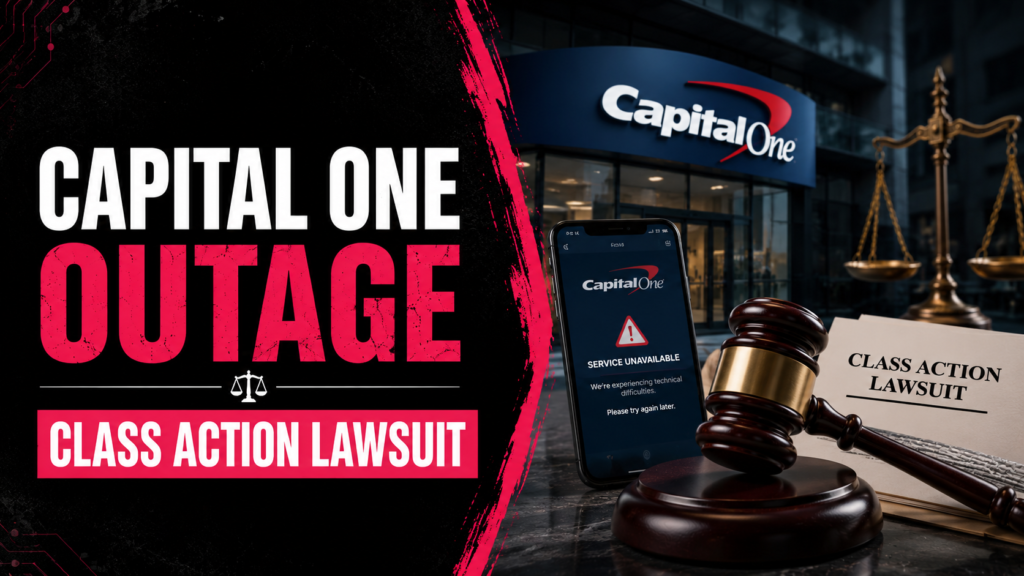
In January 2025, Capital One customers across the United States encountered a multi-day service disruption that prevented many from accessing their accounts, processing payments, or receiving direct deposits. This outage, which began around January 15, 2025, and lasted several days for some users, has led to a proposed class action lawsuit alleging that the financial institution failed to provide reliable access to customer funds.
The case, Zepeda v. Capital One Financial Corporation et al., filed on January 22, 2025, in the U.S. District Court for the Eastern District of Virginia, highlights ongoing concerns about the reliability of digital banking services and the responsibilities banks hold toward their customers during technical failures.
This article explains the capital one outage class action lawsuit, its background, the key legal issues involved, potential impacts on affected customers, and what individuals should consider moving forward. It draws on court filings, public reports, and established principles of consumer banking law to provide clear context.
This article is for informational purposes only and does not constitute legal advice. Readers with specific concerns should consult a qualified attorney or review official court documents.
Background & Legal Context
Banking outages are not unprecedented, but they carry significant weight in an era when most consumers rely on mobile apps, online portals, and electronic transfers for daily financial transactions. Capital One, a major U.S. financial institution offering checking, savings, credit cards, and other services, experienced a service disruption attributed in part to issues with a third-party service provider.
The outage reportedly began mid-month, coinciding with typical payroll deposit cycles for many workers. Customers reported inability to view balances, complete transfers, pay bills electronically, or access funds that had been deposited. According to the complaint, the disruption extended through January 18, 2025, in some cases.
U.S. banking regulations, including those enforced by the Consumer Financial Protection Bureau (CFPB) and the Office of the Comptroller of the Currency (OCC), emphasize the importance of fair treatment of deposit accounts. Federal regulations such as Regulation CC (Expedited Funds Availability) and Regulation E (Electronic Fund Transfers) govern the availability of funds and error resolution for electronic transactions.
Historically, class action lawsuits against banks for service disruptions have addressed claims of breach of contract (for failing to meet advertised service levels), negligence (in maintaining systems), and violations of state consumer protection statutes. Precedents in cases involving other major institutions underscore that while banks are not insurers against all technical problems, they may face liability if outages result from inadequate safeguards or failure to provide timely remedies.
Capital One’s deposit agreements typically outline availability of funds and electronic services, which form the contractual basis for many claims in such disputes. The lawsuit alleges that the bank’s representations about same-day availability for certain deposits were not met during the outage period.
Key Legal Issues Explained
The capital one outage class action lawsuit raises several core legal questions that courts evaluate under contract law, tort principles, and consumer statutes.
Breach of Contract: Plaintiffs contend that Capital One’s account agreements promise reliable access to funds and electronic services. When those services became unavailable, and direct deposits or transfers were delayed, this allegedly constituted a breach. In plain terms, if a bank advertises or contracts for certain performance levels (such as same-business-day availability), prolonged failure to deliver can support a claim for damages.
Negligence: The suit alleges that Capital One did not exercise reasonable care in maintaining its systems or selecting and overseeing third-party vendors. Under negligence principles, plaintiffs must generally show that the bank owed a duty of care, breached that duty, and caused foreseeable harm. Financial harm from inability to pay rent, utilities, or purchase necessities can qualify as damages.
Unjust Enrichment and Conversion: Additional claims suggest that Capital One retained control over customer funds without providing access, potentially enriching itself at customers’ expense or wrongfully exercising dominion over those assets.
State Consumer Protection Laws: The complaint invokes California’s Consumer Legal Remedies Act and Unfair Competition Law, among others. These statutes often prohibit unfair or deceptive business practices and allow for restitution or injunctive relief. Many states have analogous laws that protect consumers in banking relationships.
Class actions consolidate similar claims to promote efficiency. For certification, courts assess whether common questions of law and fact predominate (such as the cause and scope of the outage) and whether the named plaintiff’s experience is typical of the class.
Latest Developments or Case Status
As of the most recent available information, the lawsuit remains in its early stages following filing in January 2025. No final rulings on class certification, summary judgment, or settlement have been widely reported in public sources.
The case is assigned to the U.S. District Court for the Eastern District of Virginia, where Capital One maintains significant operations. Proceedings typically involve initial disclosures, motions to dismiss (if filed), discovery on technical and operational details, and potential mediation toward settlement.
Capital One has faced other high-profile matters around the same period, including CFPB actions and a substantial settlement regarding 360 Savings accounts, but those appear separate from the outage claims.
Affected customers and legal observers continue to monitor filings for updates on motions, hearings, or any proposed resolutions. Public dockets and reputable class action trackers provide primary sources for the latest status.
Who Is Affected & Potential Impact
The proposed class includes individuals across the United States who held Capital One accounts and were denied access to their accounts or funds beginning January 15, 2025. This encompasses checking and savings account holders impacted by delayed deposits, unprocessed payments, or inability to view or transfer balances.
Potential Impacts:
- Financial Hardship: Many customers reported struggles paying for food, rent, utilities, or gas, leading to late fees or overdraft issues.
- Credit and Banking Effects: Delayed payments could affect credit scores or trigger additional bank fees.
- Business Accounts: Small businesses or self-employed individuals relying on timely access may have faced operational disruptions.
- Broader Consequences: Prolonged outages erode consumer trust in digital banking and may prompt regulatory scrutiny.
Outcomes in such cases can include monetary compensation for documented losses, restitution, or changes to bank practices (such as improved backup systems or enhanced disclosures). However, results depend on the strength of evidence, defenses raised, and any negotiated resolution.
What This Means Going Forward
The capital one outage class action lawsuit underscores vulnerabilities in modern banking infrastructure, particularly reliance on third-party providers. It highlights the tension between innovation in fintech services and the need for resilience against disruptions.
For the banking industry, successful claims could encourage investment in redundant systems, better vendor oversight, and clearer contingency plans. Regulators like the CFPB and OCC may issue guidance or examinations focused on operational resilience.
For customers, the case reinforces the value of maintaining records of outages (screenshots, communications from the bank, proof of alternative expenses or late fees) and understanding account agreements. It also serves as a reminder to diversify banking relationships or have backup payment methods during potential disruptions.
Legally, the suit may contribute to evolving standards for what constitutes reasonable uptime in consumer banking. Appeals processes, if any rulings occur, could further shape precedent in the Eastern District of Virginia or on appeal to the Fourth Circuit.
Readers should monitor official court updates, Capital One communications, and reputable news sources for developments. Staying informed allows timely participation if a settlement class is certified or notices are issued.
Frequently Asked Questions
What is the capital one outage class action lawsuit about?
It alleges that a January 2025 service disruption left customers unable to access accounts and funds for multiple days, causing financial harm through delayed deposits, unprocessed payments, and related issues. The suit claims breach of contract, negligence, and violations of consumer laws.
Who can potentially join the class?
Anyone in the U.S. who held a Capital One account and experienced denied access to funds or services starting around January 15, 2025. Formal inclusion depends on court certification and notice procedures.
Has the lawsuit been settled?
As of the latest reports, the case is ongoing with no publicly confirmed settlement. Early-stage litigation often takes months or years to resolve.
What damages might affected customers recover?
Potential recovery could include actual financial losses (such as late fees, overdraft charges, or costs from inability to pay bills), restitution, and possibly interest. Specific amounts would depend on evidence and case resolution.
Do I need to do anything right now?
Preserve documentation of your experience (bank emails, transaction records, proof of harm). Consult an attorney if you suffered significant losses. Joining is typically automatic for certified classes if you meet criteria, but opt-out rights may apply in settlements.
How does this relate to other Capital One lawsuits?
This outage matter is distinct from the 2019 data breach settlement and the 360 Savings interest rate litigation, though they reflect broader consumer concerns with the institution.
Conclusion
The capital one outage class action lawsuit brings attention to the real-world consequences of banking service interruptions in an increasingly digital financial landscape. By examining the events of January 2025 through established legal frameworks, the case illustrates customer rights, bank responsibilities, and the role of the judicial system in resolving such disputes.
While the full outcome remains pending, the litigation emphasizes the importance of operational reliability and consumer protections in banking. Affected individuals should document their experiences, review account terms, and follow official updates through court records or trusted sources.
Staying informed about developments in this and similar cases helps consumers advocate for accountability and supports the broader goal of a resilient financial system. For personalized guidance, contact a licensed attorney familiar with banking and class action matters.
You May Also Like: Generational Equity Lawsuit 2026: What Business Owners Should Know