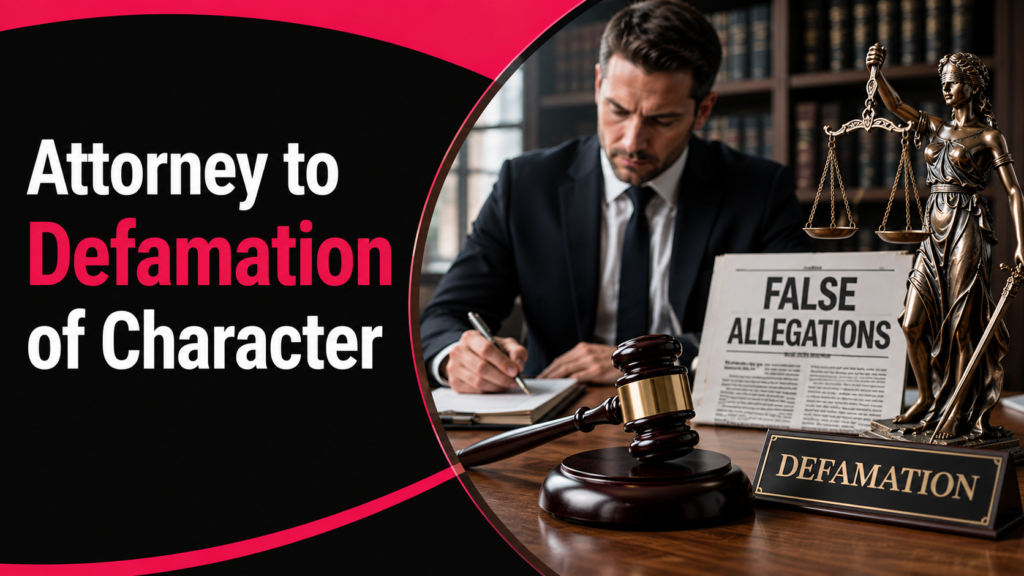

False statements can destroy careers, businesses, and personal relationships in an instant. One online post, workplace rumor, or media report spreads quickly and leaves lasting damage to reputation. If you face this harm, understanding your options matters. This guide explains what counts as legal defamation, your available remedies, and the practical steps for hiring an attorney to defamation of character cases so you can take informed action.
What Counts as Defamation of Character
Defamation happens when someone makes a false statement of fact about you that harms your reputation and shares it with at least one other person. The statement must be presented as fact, not pure opinion. Courts look for proof that the words injured how others view your character, integrity, or professional standing.
Two main forms exist. Libel covers written or fixed statements such as social media posts, articles, emails, or online reviews. Slander covers spoken statements. The distinction matters because written words often reach more people and stay available longer, which can increase the harm and the damages available.
Not every insult qualifies. Calling someone “rude” usually counts as opinion. Claiming they stole money or committed a crime when the claim is false can qualify as a defamatory statement of fact. Truth remains a complete defense in nearly every case. Privileged statements, such as those made in court proceedings under absolute privilege, also fall outside liability.
Real-world example: A private employee learns a former coworker emailed clients claiming the employee embezzled funds. The statement is false, shared with third parties, and causes lost contracts. That scenario meets the core elements of defamation.
Libel vs Slander and Why the Difference Matters
Libel vs slander turns on the form of the communication. Libel involves lasting records that people can share repeatedly. Slander involves temporary spoken words. Many modern cases involve online content, which courts usually treat as libel because the words remain fixed and searchable.
In practice, both require the same basic proof: falsity, publication to a third party, fault, and harm. Some states still treat certain spoken statements more strictly and may require proof of special (specific financial) damages for slander that does not fall into traditional per se categories. Accusations of crime, professional incompetence, serious sexual misconduct, or certain diseases often qualify as defamation per se, allowing presumed harm in many jurisdictions.
Public Figure vs Private Individual and the Actual Malice Standard
Your status changes the burden of proof. Public figure vs private individual status decides whether you must meet the higher actual malice standard.
Private individuals generally need only show the speaker acted with negligence. That means the person failed to use reasonable care in checking the facts. Public officials and public figures (celebrities, high-profile business leaders, or people who thrust themselves into public controversies) must prove actual malice. Actual malice means the speaker knew the statement was false or acted with reckless disregard for the truth. The U.S. Supreme Court established this rule in New York Times Co. v. Sullivan (1964) and extended it in later cases. The standard protects robust public debate under the First Amendment protections.
Limited-purpose public figures face the higher standard only for statements related to the public controversy they entered. Courts decide status case by case. An attorney experienced in these matters can evaluate how a court would likely classify you.
Damage to Reputation: Economic and Non-Economic Damages
Successful claims can recover economic and non-economic damages. Economic damages cover measurable losses such as lost wages, canceled contracts, reduced business revenue, or costs of reputation repair. Non-economic damages address emotional distress, humiliation, and the intangible damage to reputation.
In some cases of defamation per se, courts allow presumed damages without detailed proof of specific losses. Punitive damages may apply when the conduct shows malice or reckless indifference, subject to First Amendment limits on matters of public concern. Businesses may also pursue commercial disparagement (sometimes called trade libel) when false statements target products or services and cause specific financial harm. Commercial disparagement focuses more tightly on economic injury than personal character attacks.
Document everything early: screenshots with timestamps, witness statements, revenue records before and after the statements, and medical or therapy records if emotional harm occurred. Preservation of evidence is critical because online content can disappear.
When to Hire an Attorney to Defamation of Character
Consider hiring counsel as soon as you discover the statements. Statutes of limitations are short, often one year from publication in many states and rarely more than three. Waiting risks losing the right to sue.
You should consult early if the statements:
- Accuse you of criminal or unethical conduct
- Affect your job, clients, or business
- Spread widely online
- Come from someone with resources or a media platform
- Continue after you ask for removal
An attorney helps evaluate strength of the claim, preserve evidence, and avoid missteps that weaken your position. High-profile figures and business owners often face higher public-figure burdens and complex First Amendment issues. Private citizens and employees still benefit from early guidance on negligence standards and available remedies.
Step-by-Step Guide to Working with an Attorney to Defamation of Character
Gather and Preserve Evidence
Collect every version of the statement, the date, the audience, and proof of harm. Use archiving tools for websites. Note any admissions or continued publication after notice.
Request a Consultation
Many attorneys offer initial consultations. Bring your evidence and a clear timeline. Ask about experience with similar cases, fee structure, and realistic outcomes. Look for lawyers who handle reputation and First Amendment matters regularly.
Evaluate the Claim Strength
The attorney assesses whether the statement is fact versus opinion, your status as public or private, the level of fault required, and available defenses. They also check the statute of limitations and any state-specific retraction rules.
Send a Cease and Desist Letter or Retraction Request
A well-drafted cease and desist letter demands the speaker stop publishing the statements, remove existing ones, and sometimes issue a correction. A retraction request asks for a public correction. Many states limit certain damages if you fail to request a timely retraction. These letters create a record of notice. Continued publication after notice can support findings of fault or actual malice.
Negotiate or File Suit
Some matters resolve with removal, apology, and payment of limited damages. If not, the attorney files a complaint in the proper court. Discovery follows, then possible summary judgment motions, settlement talks, or trial.
Pursue Remedies and Protect Against Future Harm
Outcomes can include compensatory damages, injunctions against further statements, and in some cases punitive awards. Counsel may also advise on reputation management steps that do not interfere with the legal case.
Throughout the process, the attorney navigates First Amendment protections, privileges, and anti-SLAPP statutes that exist in many states to deter frivolous suits aimed at silencing speech.
Cost of Hiring an Attorney to Defamation of Character
Fees vary by complexity, location, and experience. Many attorneys charge hourly rates, commonly ranging from a few hundred dollars per hour upward for specialists. Clients often pay an initial retainer of several thousand dollars. Contingency arrangements exist but remain less common because collectability and proof challenges make outcomes uncertain. Flat fees sometimes apply to demand letters or content removal efforts. Full litigation can cost tens of thousands of dollars if the case proceeds through discovery and trial. Discuss fee structure, expected phases, and cost controls at the first meeting.
Common Pitfalls to Avoid
Do not respond publicly in ways that create new problems or appear to admit facts. Avoid deleting your own evidence. Do not wait until the statute of limitations nears expiration. Self-drafted cease and desist letters can backfire if they contain threats or inaccurate legal claims. Always verify jurisdiction and applicable state law, because rules differ significantly.
Business Reputation Considerations
Business owners often face reviews, competitor statements, or employee claims that harm commercial standing. Commercial disparagement claims require proof of specific economic loss in most jurisdictions. An attorney experienced in business reputation matters can distinguish personal defamation from product or service attacks and select the stronger theory. Early intervention through platform reporting combined with legal demand letters frequently removes harmful content without full litigation.
Legal Remedies Available
Beyond damages, courts can order removal of statements, issue injunctions against repetition, and in some cases award attorney fees under anti-SLAPP or other statutes. Retraction or correction can mitigate ongoing harm even if it does not erase past damage. Settlement agreements often include non-disparagement clauses and confidentiality terms.
Conclusion
False statements that harm reputation create real personal and financial costs. Understanding the elements of defamation, the difference between public and private status, and the available remedies puts power back in your hands. Early documentation, a carefully drafted demand, and guidance from experienced counsel improve the chances of stopping the harm and recovering losses. If you face ongoing damage from false statements, consult a qualified attorney to evaluate your specific situation and protect your rights.
Frequently Asked Questions
What is the difference between libel and slander?
Libel is written or fixed defamation. Slander is spoken. Both require a false statement of fact published to a third party that causes harm.
Do I need to prove actual malice if I am a private person?
Usually no. Private individuals typically need only show negligence. Public figures must prove actual malice (knowledge of falsity or reckless disregard).
How long do I have to file a defamation claim?
Most states allow one or two years from the date of publication. A few allow three years. Check your state rules immediately.
Can I recover damages for emotional distress?
Yes. Non-economic damages for humiliation and distress are available in many cases, especially alongside economic losses.
Should I send a cease and desist letter myself?
It is safer to have an attorney draft it. A poorly worded letter can create new legal exposure or weaken your position.
What if the statement is mostly true but exaggerated?
Substantial truth is usually a defense. Minor inaccuracies that do not change the overall meaning often do not support a claim.
Does the First Amendment protect all opinions?
Pure opinions that do not imply false facts receive strong protection. Statements that assert or imply verifiable false facts can still be actionable.
You May Also Like: How to Find the Best Tenant Lawyer for Your Legal Dispute