
Every year, motor vehicle crashes leave thousands with life-altering injuries. Traumatic brain injury ranks among the most serious outcomes. In 2005, a rainy night near Wichita Falls, Texas, changed everything for a 22-year-old college student named Sean Carter. He climbed into the passenger seat of a pickup truck after a night out. Minutes later, the vehicle spun and slammed into a tree.
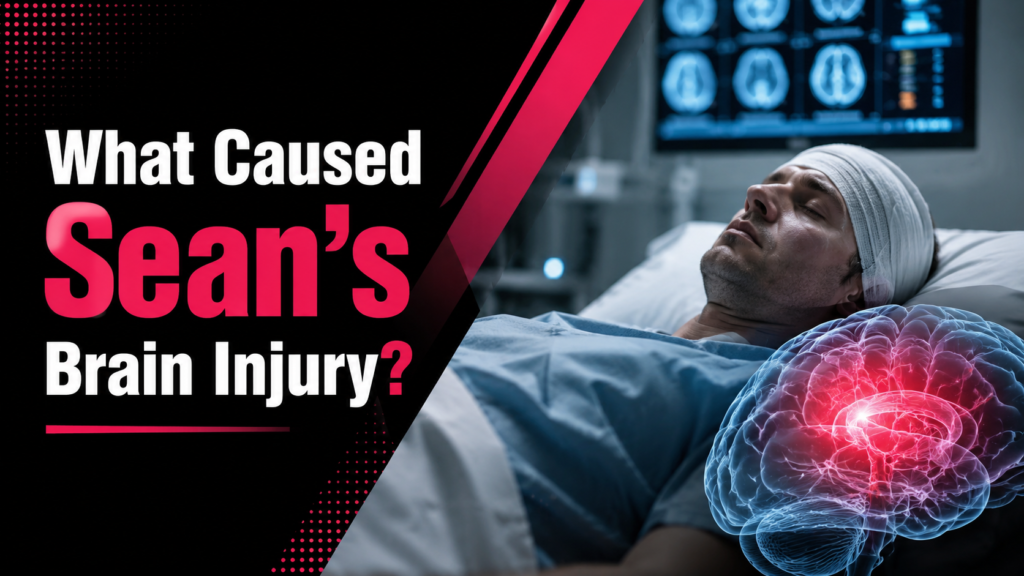
What caused Sean’s brain injury was not a direct blow to the head. Rapid rotational forces inside the skull produced a severe diffuse axonal injury. This article unpacks the accident, the medical diagnosis, the long recovery, and the broader lessons for road safety. Readers will gain clear insight into traumatic brain injury, the role of impaired or distracted driving, and practical steps that support survivors and prevent similar tragedies.
The Night That Changed Everything
Sean Carter attended Midwestern State University. He modeled on the side and planned a path toward law school. On the Saturday night before Easter Sunday in March 2005, he and friends went barhopping. Sean decided he would not drive. He got into the passenger seat of a friend’s pickup.
The driver had been drinking heavily. About five minutes from Sean’s apartment, the truck lost control. It spun and hit a tree on the passenger side. Sean’s body took the full impact. His right side shattered. Multiple bones broke. His pelvis fractured. His bladder ruptured. One lung collapsed. Internal lacerations required exploratory surgery.
Sean’s head never struck an object. Nothing hit his head. When the truck stopped suddenly, his head continued moving. The brain shifted and twisted inside the skull. That motion tore nerve fibers throughout the brain. Doctors later called it a severe diffuse axonal injury.
The driver walked away unhurt and later pleaded guilty to felony intoxication assault. Sean arrived at the hospital with a Glasgow Coma Scale score of 3. He spent 39 days in a medical coma. His mother Jenny quit her career to become his full-time caregiver. The family’s world narrowed to hospital rooms, surgeries, and uncertainty.
This single-vehicle crash illustrates how quickly a night out can turn catastrophic. It also shows why choosing the right driver matters as much as choosing not to drive yourself.
Understanding Diffuse Axonal Injury
Diffuse axonal injury is a form of traumatic brain injury caused by rapid acceleration, deceleration, or rotational forces. Axons are the long fibers that carry signals between brain cells. When the brain twists or shifts violently, these fibers stretch and shear. The damage spreads across multiple regions rather than staying in one spot.
Common settings for this injury include high-speed motor vehicle accidents, falls from height, and certain assaults. In Sean’s case, the sudden stop of the truck produced the shearing forces. No external wound appeared on the head, yet the internal damage proved severe.
Symptoms often begin with immediate loss of consciousness. A person may remain in a coma for hours, days, or longer. When consciousness returns, challenges can include:
- Difficulty speaking or forming words
- Weakness or limited movement on one or both sides
- Memory and attention problems
- Balance and coordination issues
- Changes in mood or behavior
Imaging such as MRI often reveals the scattered lesions better than an initial CT scan. Severity is graded by the depth and location of the damage. Involvement of the brainstem carries a more guarded outlook. Many people with severe diffuse axonal injury never fully regain independence. Others make gradual gains over years through intensive rehabilitation.
Sean’s neurosurgeon classified the injury as severe. Statistics at the time suggested most people with this level of damage remained profoundly impaired. Yet the brain retains a degree of plasticity. With consistent therapy and support, some function can return.
Medical Diagnosis and Immediate Care
At the scene and in the emergency department, teams focused first on life-threatening injuries. Sean received blood transfusions. Surgeons addressed internal bleeding and stabilized fractures. A tracheotomy supported breathing. A feeding tube provided nutrition. Metal hardware later held bones in place: an intramedullary nail in the femur, plates and screws in the arm and pelvis, and more. Sean eventually carried 18 pieces of metal and more than 35 scars.
The brain injury diagnosis came after imaging and clinical observation. Because the head showed no external trauma, the diffuse axonal injury explanation helped the family understand why recovery would differ from a simple fracture or even a localized contusion. The entire communication network of the brain had been disrupted.
Early care prioritized preventing secondary damage. Teams monitored intracranial pressure, oxygen levels, and blood pressure. Once stable, Sean moved through intensive care, acute rehabilitation, and longer-term facilities. Progress stayed slow. For months he could move little more than one index finger and slight head motions. Communication began with an alphabet board and later an iPad with text-to-speech software.
This phase underscores a key point about neurological damage. Visible wounds heal on a relatively predictable timeline. Axonal injury does not. The brain must rebuild pathways, and that process depends on repetition, rest, nutrition, and time.
The Long Road of Cognitive Rehabilitation
Recovery after severe traumatic brain injury rarely follows a straight line. Sean spent months in specialized centers. Physical therapists worked on mobility. Occupational therapists rebuilt daily living skills. Speech and language specialists addressed communication even though vocal cords functioned. The motor planning centers of the brain remained impaired.
Two years after the crash, limited use of the arms and hands returned. Walking took far longer. With specialized equipment such as a reverse posterior walker and intensive gait training, Sean eventually covered short distances. He still relies on a wheelchair for longer movement and needs assistance with many basic tasks.
Cognitive rehabilitation formed another core piece. Therapists challenged attention, memory, and problem-solving. Family involvement proved essential. Jenny provided structure, encouragement, and consistency. Sean set new goals: independent living skills, public speaking, and advocacy.
Today he communicates by typing on a tablet. The synthetic voice delivers messages that reach school assemblies, victim impact panels, and community groups. The nonprofit When Sean Speaks carries the story forward. The focus remains clear: think before you get behind the wheel, and think carefully about whose car you enter as a passenger.
Rehabilitation continues years later. The brain keeps adapting when challenged. Small daily gains accumulate. Support networks, adaptive technology, and realistic hope make the difference between stagnation and progress.
Road Safety Awareness and Preventable Causes
Motor vehicle accidents remain a leading cause of traumatic brain injury. Falls and intentional injuries also contribute significantly, yet crashes affect people of all ages on ordinary roads. Impaired driving, whether from alcohol, drugs, or distraction, multiplies risk.
Distracted driving involves any activity that takes eyes, hands, or mind off the road. Texting, adjusting music, talking on a phone, or even intense conversation can delay reaction time. National data show thousands of deaths and hundreds of thousands of injuries each year linked to distraction. Young drivers show elevated rates. The same rotational forces that injured Sean can arise in any sudden stop or collision caused by delayed response.
Alcohol impairment compounds the problem. Reaction times slow. Judgment falters. Vehicle control suffers. Sean’s driver later faced legal consequences, yet the physical and emotional costs fell heaviest on the passenger and his family.
Road safety awareness campaigns emphasize practical steps:
- Designate a sober driver before the first drink.
- Use ride-share or public transit when plans include alcohol.
- Put the phone away or use hands-free modes only when truly necessary.
- Wear seat belts every trip. Sean’s belt kept him in the vehicle, yet the forces still caused catastrophic injury.
- Speak up if a driver’s condition worries you.
Community programs, school presentations, and victim impact panels turn personal stories into prevention tools. Sean and Jenny have spoken to tens of thousands of students. The message lands because it comes from lived experience rather than abstract statistics.
Legal Aspects and Community Support
After a crash that produces traumatic brain injury, families often face complex legal and financial questions. Criminal charges may proceed against an impaired driver. Civil claims can address medical costs, lost wages, ongoing care, and pain and suffering. Guardianship proceedings may become necessary when a survivor cannot manage personal affairs.
Sean’s mother assumed guardianship early on. Years later, as recovery advanced, the court dismissed it. Disability benefits, adaptive equipment funding, and nonprofit support helped bridge gaps. Insurance battles remain common. Families benefit from documenting every medical step and consulting attorneys experienced in catastrophic injury cases.
Community resources matter equally. Brain injury associations offer peer support, education, and navigation help. Rehabilitation centers specialized in neurological recovery provide targeted therapy. Adaptive sports and exercise programs rebuild confidence. Faith communities and local groups often step in with practical assistance and emotional strength.
Sean’s story also highlights the power of purpose. Turning private pain into public education restored a sense of agency. Many survivors find meaning in advocacy, mentoring, or simply sharing honest accounts of daily challenges.
Long-Term Effects and Living with TBI
Severe traumatic brain injury rarely ends when the hospital stay concludes. Cognitive changes can persist. Fatigue arrives easily. Social interactions require extra effort. Independence remains partial for many. Mood shifts, sleep disruption, and sensory sensitivities appear frequently.
Yet adaptation is possible. Technology bridges communication gaps. Mobility aids expand range. Structured routines reduce cognitive load. Family caregivers need support too: respite care, counseling, and realistic expectations prevent burnout.
Sean lives with ongoing limitations. He walks short distances with a walker. He relies on others for many daily tasks. He continues therapy and sets new goals. The injury redefined his path, but it did not erase his capacity to influence others.
Research continues into better acute treatments, neuroprotective strategies, and rehabilitation techniques. Early intervention, specialized care, and long-term follow-up improve odds. No two recoveries look identical. Age, injury severity, pre-injury health, and access to resources all shape outcomes.
Key Takeaways from Sean’s Experience
What caused Sean’s brain injury was the violent motion of his brain inside the skull during a sudden vehicle stop. The underlying driver impairment made the crash far more likely. The medical diagnosis of diffuse axonal injury explained the widespread neurological damage. Years of cognitive rehabilitation, family dedication, and adaptive tools produced meaningful gains.
The broader lesson reaches every driver and passenger. Impaired or distracted driving turns ordinary roads into high-risk environments. Simple choices (sober drivers, phone-free focus, seat belts) reduce the chance of similar outcomes. Survivors and families need coordinated medical, legal, and community support. Awareness campaigns that feature real stories, such as When Sean Speaks, convert tragedy into prevention.
If you or someone you know faces the aftermath of traumatic brain injury, seek specialized care early. Contact brain injury associations for local resources. Speak with a qualified attorney about rights and options. Most importantly, protect yourself and others on the road every day.
Frequently Asked Questions
What exactly is diffuse axonal injury?
It is widespread damage to the brain’s connecting fibers caused by rapid twisting or acceleration-deceleration forces. It often occurs in high-energy vehicle crashes even without a direct head impact.
Can someone recover fully from severe diffuse axonal injury?
Complete recovery is uncommon. Many people regain partial function over months or years with intensive therapy. Outcomes vary by severity, location of damage, age, and rehabilitation quality.
How does distracted driving lead to brain injuries?
Distraction delays reaction time. Sudden stops or collisions produce the same shearing forces inside the skull that cause diffuse axonal injury and other forms of traumatic brain injury.
What role does a medical coma play after TBI?
A medical or induced coma can protect the brain from secondary swelling and pressure. Duration depends on the injury. Emergence often marks the start of a long rehabilitation phase.
Are there legal options after a crash caused by an impaired driver?
Yes. Criminal charges may apply. Civil claims can seek compensation for medical costs, ongoing care, and other damages. Guardianship and disability benefits may also become relevant.
How can families support recovery after severe TBI?
Provide consistent routines, encourage therapy participation, learn about the injury, seek caregiver support, and celebrate incremental progress. Professional guidance from neurorehabilitation specialists helps.
Where can people find reliable information on traumatic brain injury?
Trusted sources include the Centers for Disease Control and Prevention (CDC) TBI pages and state brain injury associations. Medical teams remain the primary resource for individual cases.
You May Also Like: What Is Scarlet Law and How It Protects Your Rights