
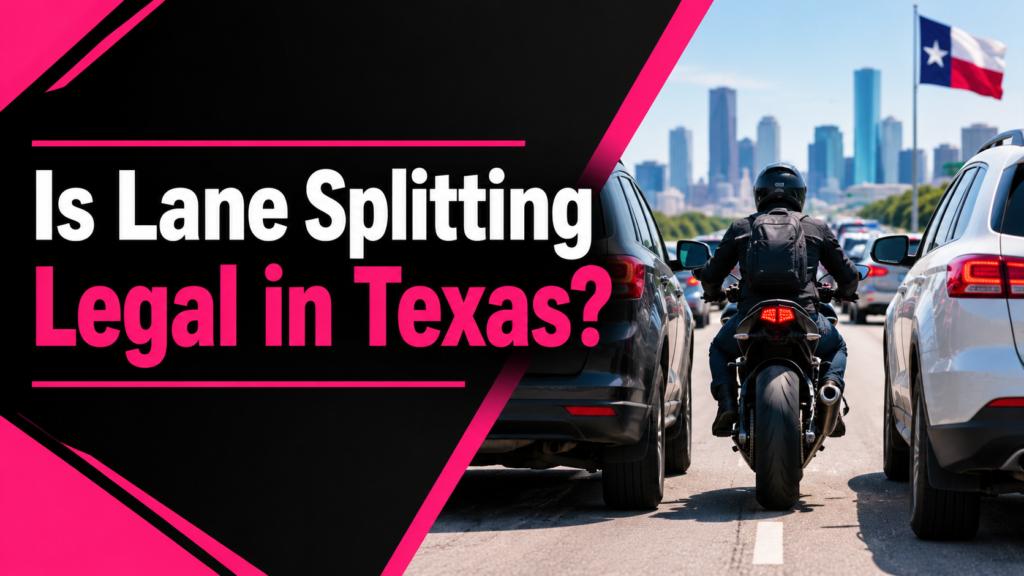

Stuck in Houston traffic or crawling through Dallas rush hour, many riders wonder if slipping between cars could save time. The short answer is no. Is lane splitting legal in Texas? Under current law, it is not. This 2026 legal guide breaks down the Texas Transportation Code rules, the difference between lane splitting and lane filtering, penalties, how these moves affect motorcycle accident claims, and practical steps every rider should take.
Texas motorcyclists, daily commuters, and out-of-state riders traveling through the state need clear answers. Personal injury victims also need to understand how a single traffic choice can change the outcome of a claim. This article explains the statutes in plain language, shows real-world risks, and points you toward safer riding and stronger legal protection.
What Is Lane Splitting and Lane Filtering?
Lane splitting and lane filtering often get mixed up, yet both matter under Texas rules.
Lane splitting means riding a motorcycle between two lanes of traffic that are moving in the same direction. The bike travels along the painted line or the narrow gap while cars around it move at normal road speed.
Lane filtering describes the slower version. A rider moves between stopped or very slow vehicles, usually at a red light or in heavy congestion, to reach the front of the line.
Both practices aim to keep the motorcycle moving when cars are stuck. Texas treats them the same way under the current statute. Neither is allowed for civilian riders.
Lane sharing is different and legal. Two motorcycles may ride side by side in a single lane if both riders agree and they do not block traffic. Three or more motorcycles side by side in one lane is prohibited.
Understanding these terms helps you avoid citations and protects your position if a crash happens.
Texas Law on Lane Splitting: The Clear Ban
Texas closed any gray area in 2023. House Bill 4122 added Section 545.0605 to the Texas Transportation Code. The law took effect September 1, 2023, and remains in force in 2026.
The statute states that the operator of a motorcycle:
- Is entitled to full use of a lane. Other motor vehicles may not drive in a way that deprives a motorcycle of that full use.
- May operate two abreast in a single lane with another motorcycle.
- May not operate more than two abreast in a single lane.
- May not operate the motorcycle between lanes of traffic moving in the same direction.
- May not pass a motor vehicle while in the same lane as the vehicle being passed.
The only exception covers police officers performing official duties. No civilian exception exists for emergencies, slow traffic, or stopped vehicles at a light.
Before 2023, officers sometimes cited riders under the general lane-discipline rule in Section 545.060, which requires every vehicle to stay as nearly as practical within a single marked lane. The 2023 statute removed doubt. Lane splitting and lane filtering are now explicit violations.
A 2025 bill (HB 2957) attempted to create a narrow filtering exception on divided highways when traffic moved at 10 mph or less and the motorcycle stayed under 20 mph. That bill died in committee. As of 2026, the ban stands.
You can read the current text of the Texas Transportation Code on the official statutes website at statutes.capitol.texas.gov.
Penalties for Lane Splitting in Texas
A citation for violating Section 545.0605 is a moving violation. Fines typically range from about $175 to $300 once court costs are added. Exact amounts vary by county.
In some cases officers may charge reckless driving if the maneuver creates a clear danger. That charge can carry higher fines and possible jail time up to 30 days.
Beyond the ticket, the violation adds points to your driving record. Insurance rates often rise. A citation also becomes powerful evidence if you are later involved in a crash. Defense lawyers and insurance adjusters will point to the illegal maneuver to argue you share fault.
Out-of-state riders face the same rules. Texas plates or California plates make no difference. Enforcement can be stricter in urban areas such as Houston, Dallas, Austin, and San Antonio where congestion is heavy.
How Lane Splitting Affects Motorcycle Accident Liability
Texas follows a modified comparative negligence system under Chapter 33 of the Civil Practice and Remedies Code. Each party receives a percentage of fault. Your recovery is reduced by your share. If you are found 51 percent or more at fault, you recover nothing.
Lane splitting creates an easy argument for the other side. Even if a car changed lanes without looking or failed to yield, the defense can claim your illegal position between lanes contributed to the crash. A jury or adjuster may assign you 20, 30, or even 51 percent of the blame.
Consider a common scenario. You filter between stopped cars at a light. A driver suddenly opens a door or drifts sideways. You collide. The driver may be primarily negligent, yet the fact that you were between lanes can reduce your compensation or bar recovery entirely.
The same risk applies if you were splitting moving traffic. Speed differentials and limited escape space make crashes more severe. Texas law does not automatically make the rider fully responsible, but it gives the insurance company a strong tool.
Riders who stay fully within a single lane keep a clearer path to full recovery when another driver causes the crash.
Related Texas Motorcycle Laws Riders Must Know
Lane rules sit alongside other important requirements.
Helmet laws. Every operator and passenger under 21 must wear a DOT-approved helmet. Riders 21 and older may ride without a helmet if they have completed an approved motorcycle operator training course or carry health insurance that covers motorcycle injuries. Officers cannot stop you solely to check for the exemption. Not wearing a required helmet does not bar a claim, but insurers may argue it increased the severity of head injuries and push for a higher fault percentage.
Full lane rights. Section 545.0605 confirms that a motorcycle is entitled to the full use of its lane. Drivers who crowd, cut off, or force a rider out of the lane can be held responsible.
Licensing and equipment. A Class M endorsement is required. Proper lights, mirrors, and registration must be in place.
These rules work together. Following them reduces both citation risk and comparative fault arguments after a crash.
Why Texas Keeps Lane Splitting Illegal
Lawmakers cite visibility and predictability. Motorcycles are smaller and easier for drivers to miss, especially in mirrors or blind spots. Moving between lanes can surprise other drivers who expect traffic to stay in marked lanes.
Supporters of legalization argue that controlled filtering at low speeds can reduce rear-end collisions and keep bikes out of stop-and-go traffic where they are more vulnerable. California allows lane splitting with guidelines, and a few other states permit limited filtering. Texas has chosen a stricter approach focused on uniform lane discipline.
Whatever the policy debate, the current statute is clear. Riders who ignore it accept both the ticket risk and the claim risk.
Practical Safety Tips for Texas Riders
Stay fully inside your lane even in heavy traffic. Leave space so you can react if a car changes lanes without warning. Use your lights and position yourself where drivers can see you.
When traffic stops, wait your turn. Do not move between vehicles. Two motorcycles may ride side by side when both riders agree and conditions allow.
Complete an approved safety course. Many riders find the skills training improves hazard awareness and also qualifies them for the helmet exemption if they are 21 or older.
Carry adequate insurance. Liability minimums are required, but underinsured motorist coverage and medical payments coverage provide extra protection.
If you travel from a state where splitting is legal, adjust immediately once you cross into Texas. Local enforcement does not care about the rules back home.
What to Do After a Motorcycle Accident Involving Lane Issues
Seek medical care first. Document every injury even if symptoms feel mild at the start.
Call the police and obtain the crash report. Note the exact position of the vehicles and any statements about lane position.
Take photos of the scene, vehicle damage, road conditions, and any visible injuries. Gather contact information for witnesses.
Avoid admitting fault at the scene. Stick to the facts.
Contact a personal injury lawyer experienced in motorcycle cases as soon as possible. Texas gives you two years from the date of the crash to file a lawsuit, but evidence fades quickly. An attorney can preserve video, reconstruct the scene, and counter comparative negligence arguments.
Even if you were lane splitting, recovery may still be possible if the other driver’s negligence was greater. A skilled lawyer evaluates the full picture rather than letting the insurance company decide alone.
Conclusion
Lane splitting and lane filtering remain illegal in Texas under the 2023 statute that is still in effect in 2026. Riders who stay within a single marked lane avoid citations, protect their insurance rates, and keep stronger positions in any personal injury claim. Texas comparative negligence rules make every traffic choice count. Full lane rights, proper helmets when required, and defensive riding habits give you the best chance of arriving safely and recovering fully if another driver causes a crash.
If you have been injured in a motorcycle accident and have questions about liability, lane position, or your rights, consult an experienced Texas personal injury lawyer. Early legal advice can preserve evidence and protect the compensation you may be entitled to receive. Ride smart, stay legal, and know the rules before you roll.
Frequently Asked Questions
Is lane splitting legal in Texas in 2026?
No. Texas Transportation Code Section 545.0605 prohibits operating a motorcycle between lanes of traffic moving in the same direction and prohibits passing a vehicle while in the same lane.
Is lane filtering legal in Texas?
No. The same statute covers filtering between stopped or slow vehicles. No civilian exception exists.
Can two motorcycles share a lane in Texas?
Yes. Two motorcycles may ride two abreast in a single lane. Three or more may not.
What is the penalty for lane splitting in Texas?
Typical fines range from roughly $175 to $300 including court costs. Reckless driving charges can carry higher penalties. Points and insurance increases often follow.
What happens if I get in an accident while lane splitting?
The other driver may still be primarily at fault, but your violation can increase your share of comparative negligence. If you are found 51 percent or more responsible, you recover nothing under Texas law.
Do out-of-state riders have to follow Texas lane splitting rules?
Yes. Texas law applies to every motorcycle operated on Texas roads regardless of where the bike is registered.
Why is lane splitting illegal in Texas?
The statute prioritizes predictable lane use and the reduced visibility of motorcycles. Lawmakers have not adopted the limited filtering exceptions found in a few other states.
You May Also Like: How a Semi Truck Accident Attorney Protects Your Legal Rights