
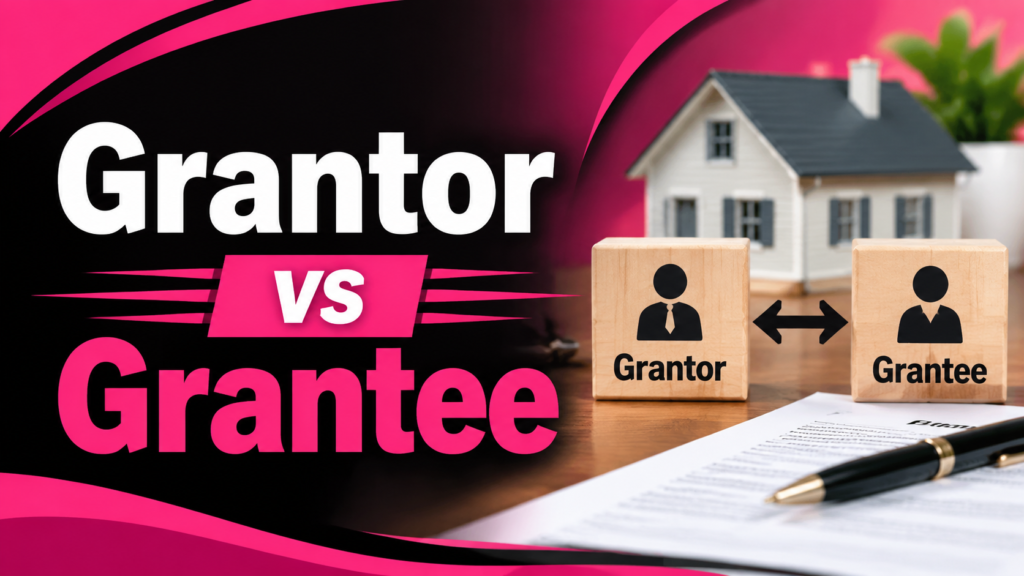

Buying or selling a home feels exciting until the paperwork hits the table. Suddenly you’re staring at a property deed filled with terms like grantor and grantee, and the words feel more confusing than the actual price negotiation. You’re not alone. Most first-time buyers and many experienced owners mix up these roles at least once.
This guide breaks down the grantor vs grantee difference in plain English. You’ll learn who does what, why the type of deed matters, and how to avoid title mistakes that can haunt a property for years. Whether you’re a homebuyer, seller, investor, or someone handling an estate transfer, you’ll walk away knowing exactly where you stand in the process.
What Is a Grantor in Real Estate?
The grantor is the person or entity transferring ownership or an interest in the property. Think of the grantor as the giver. In a typical home sale, the grantor is the seller.
The grantor must currently hold a legal interest in the property. You cannot give away something you do not own. The grantor signs the deed, and that signature (usually notarized) is what starts the legal transfer.
In some situations the grantor is not an individual seller. It could be:
- A bank after foreclosure
- A trustee of a trust
- An executor of an estate
- Both spouses when the home is jointly owned
The grantor’s main job is to convey whatever interest they have, according to the promises written in the deed.
What Is a Grantee in Real Estate?
The grantee is the person or entity receiving the property interest. In a sale, the grantee is the buyer.
Unlike the grantor, the grantee usually does not need to sign the deed for it to be valid. Acceptance is generally assumed when the transfer benefits the grantee. The grantee’s name appears on the deed as the new owner.
Once the deed is delivered and accepted, the grantee holds legal title. That title gives the right to occupy the property, improve it, sell it later, or pass it to heirs, subject to any remaining liens or easements.
Grantor vs Grantee: The Core Difference
The easiest way to remember the roles is the ending of the words. “-or” is the one who acts. “-ee” is the one who receives. The same pattern shows up in lessor/lessee and mortgagor/mortgagee.
| Role | Action | Typical Party in a Sale | Signs the Deed? |
|---|---|---|---|
| Grantor | Transfers the interest | Seller | Yes |
| Grantee | Receives the interest | Buyer | Usually no |
One person can be a grantor in one deal and a grantee in another. You cannot be both on the same deed for the same interest.
How Title Transfers Work in a Property Sale
Ownership moves through a process called conveyance. The key document is the property deed. Here is the typical flow:
- The parties agree on terms in a purchase contract.
- The title company or attorney searches the chain of title to confirm the seller can convey clear ownership.
- The correct type of deed is prepared with the grantor’s and grantee’s full legal names and a precise legal description of the property.
- The grantor signs the deed in front of a notary.
- The deed is delivered to the grantee (or the closing agent).
- The deed is recorded in the county land records.
Recording does not create the transfer. Delivery and acceptance do. Recording protects the grantee against later claims by putting the world on notice.
A title company usually handles the search, insurance, and recording. Title insurance protects the grantee (and often the lender) if a problem surfaces later that the search missed.
Common Types of Property Deeds
The type of deed decides how much protection the grantee receives and how much risk the grantor keeps.
General Warranty Deed
This is the strongest protection for the grantee in most residential sales. The grantor promises:
- They own the property and have the right to sell it.
- The title is free of undisclosed liens or claims.
- They will defend the grantee against any title problems, even ones that started before the grantor owned the property.
Buyers almost always prefer a general warranty deed because the protection covers the entire chain of title.
Special Warranty Deed (or Grant Deed in Some States)
The grantor only promises that they did not create any title problems during their ownership. Anything that happened before is the grantee’s risk. Commercial deals and some states use this form more often.
Quitclaim Deed
The grantor transfers whatever interest they may have, if any, with zero promises. The grantee gets no warranty that the grantor even owns the property.
Quitclaim deeds are common between family members, in divorces, or when clearing a cloud on title. They are risky in arm’s-length sales.
Other Special-Purpose Deeds
Sheriff’s deeds, trustee’s deeds, and personal representative deeds appear in foreclosure, trust, or probate situations. These usually carry limited or no warranties.
Grantor and Grantee Roles Beyond a Simple Sale
In a Trust
The person who creates and funds the trust is the grantor (also called settlor or trustor). The beneficiaries who eventually receive benefits are the grantees of those benefits. When property moves into the trust, the individual owner is the grantor and the trust (or trustee) is the grantee. When property later leaves the trust, the trustee becomes the grantor.
In a Mortgage or Deed of Trust
The borrower is the grantor of a security interest. The lender (or a trustee for the lender) is the grantee of that interest. The borrower still owns the home, but the lender holds a lien.
Can a Grantor Also Be a Grantee?
Not on the same deed for the same interest. However, a person can transfer property into a trust they control and later receive it back, or buy property and later sell it. The roles simply switch with each new document.
Rights and Responsibilities of Each Party
Grantor responsibilities include:
- Owning the interest they claim to transfer
- Signing a properly prepared and notarized deed
- Delivering the deed with the intent to transfer title immediately
- Honoring any warranties written in the deed
Grantee rights include:
- Receiving the interest described in the deed
- Recording the deed to protect against later claims
- Enforcing any warranties the grantor made
- Choosing how to hold title (sole ownership, joint tenancy, tenants in common, etc.)
Both parties benefit from a clean legal description, accurate names, and proper recording.
Step-by-Step: What Happens at Closing
At a typical closing the title company or attorney presents the deed. The grantor reviews and signs it. The grantee may or may not sign. Funds are disbursed, keys are handed over, and the deed is sent for recording.
After recording, the grantee should receive a copy of the recorded deed. Keep it with your important papers. It is proof of ownership.
Common Pitfalls That Create Title Problems
Many title headaches start with simple mistakes:
- Name mismatches (using a nickname instead of the full legal name that appears on the prior deed)
- Missing signatures from co-owners
- Incorrect or incomplete legal description copied from a tax bill instead of the prior deed
- Failure to record the deed promptly
- Using a quitclaim deed when a warranty deed was expected
- Transferring property subject to a mortgage without lender approval (due-on-sale risk)
A careful review by a title professional catches most of these before closing. If an error surfaces later, a corrective deed or affidavit may fix it, but the original grantor often must cooperate.
The Chain of Title and Why It Matters
The chain of title is the recorded history of every transfer of the property. Each link is a deed from a prior grantor to a prior grantee. Gaps, missing signatures, or unrecorded interests create “clouds” that can stop a future sale or loan.
Title searches examine this chain. Title insurance protects against defects the search should have found (and some it could not).
Easements and Other Interests That Survive the Transfer
An easement (such as a utility right-of-way or shared driveway) usually stays with the land. The grantor cannot erase it simply by selling. The grantee takes the property subject to recorded easements and other encumbrances listed in the deed or discovered in the title search.
Practical Tips for Buyers and Sellers
If you are the seller (grantor):
- Confirm your name matches the prior deed exactly.
- Gather any divorce decrees, death certificates, or trust documents that affect ownership.
- Understand which warranties you are giving.
If you are the buyer (grantee):
- Insist on the strongest deed your contract allows.
- Review the title commitment carefully.
- Purchase owner’s title insurance even if the lender requires only a loan policy.
- Confirm the deed is recorded after closing.
Investors and estate planners should pay special attention to how title is held and whether transfers into or out of trusts or LLCs create unexpected tax or financing issues.
Frequently Asked Questions
Is the buyer the grantor or the grantee?
The buyer is the grantee. The seller is the grantor.
Who signs the deed, the grantor or the grantee?
The grantor must sign. The grantee usually does not need to sign for the deed to be valid.
What is the difference between grantor and grantee on a deed?
The grantor is the current owner transferring the property. The grantee is the new owner receiving it.
Can a grantor also be a grantee?
Not on the same deed. A person can switch roles across different transactions.
What is grantor vs grantee in a trust?
The person who creates and funds the trust is the grantor. The beneficiaries who receive benefits are treated as grantees of those benefits.
Does a quitclaim deed protect the grantee?
No. A quitclaim deed offers no warranties. The grantee receives only whatever interest the grantor actually had.
Why does the type of deed matter so much?
The deed type decides who bears the risk if a title problem appears later. A general warranty deed places that risk on the grantor. A quitclaim deed leaves it entirely on the grantee.
You May Also Like: What Is a Scrivener’s Error in Legal Contracts and Real Estate?