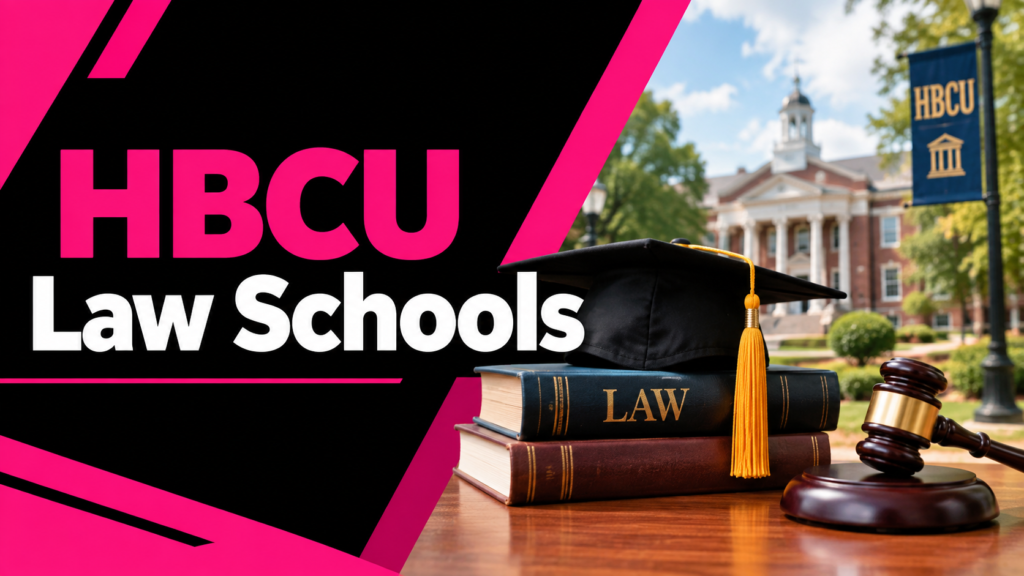

Only about 5% of practicing lawyers in the United States are Black, according to long-standing data from the American Bar Association. That gap is not just a statistic. It is a call to action for the next generation of legal leaders. If you are a prospective law student, especially a Black or underrepresented minority applicant, HBCU law schools offer a powerful path forward. These institutions deliver rigorous legal education, strong community support, and a proven track record of launching careers in private practice, public interest, government, and beyond.
This guide breaks down the best HBCU law schools, their history, admissions realities, bar passage performance, tuition, and career outcomes. You will find practical advice on applications, what makes these schools distinct, and how to choose the right fit for your goals. Whether you are still researching or ready to apply, this overview equips you with the facts you need.
What Makes HBCU Law Schools Unique
Historically Black Colleges and Universities (HBCUs) were founded to educate Black Americans when other institutions shut their doors. Their law schools carry that mission into legal education. There are six ABA-accredited HBCU law schools today. They produce a significant share of the nation’s Black lawyers while welcoming students of all backgrounds.
These schools emphasize diversity in law, practical training through legal aid clinics, and a culture of support that many students describe as family-like. Alumni networks are tight and active. Graduates often credit the environment with building confidence and professional identity that mainstream schools sometimes overlook. Many offer strong opportunities in legal clerkships, public interest work, and government service, areas where representation matters deeply.
The juris doctor degree from an HBCU carries weight. Employers in many markets recognize the practical skills and resilience these graduates bring. Bar exam success varies by school, yet ultimate passage rates (within two years) generally meet or approach ABA standards at most of them. Career outcomes include placements at major firms, federal agencies, nonprofits, and solo or small-firm practices that serve underserved communities.
The Six ABA-Accredited HBCU Law Schools
Here is a clear overview of each school, drawn from recent ABA data and institutional reports. Numbers can shift year to year, so always verify the latest figures on the school’s site or ABA 509 reports.
Howard University School of Law
Located in Washington, D.C., Howard is the oldest and most nationally recognized HBCU law school. Founded in 1869, it has produced generations of civil rights leaders, including Thurgood Marshall.
Recent median LSAT scores sit around 156, with median undergraduate GPA near 3.63. Acceptance rates have hovered near 24%. First-time bar passage rates have improved, reaching approximately 78% in recent reporting cycles. Employment outcomes stand out: many graduates land positions at national law firms, in public service, and in D.C. and New York markets. Tuition is higher than public HBCU peers, roughly in the low $40,000s per year before aid.
Howard’s location offers unmatched access to federal agencies, courts, and advocacy organizations. Clinics and externships are robust. For students aiming at national careers or Big Law with a social justice focus, Howard remains a top choice among hbcu law schools.
Texas Southern University Thurgood Marshall School of Law
Based in Houston, this school was established in the late 1940s in response to segregation. It is named for the trailblazing Justice and remains a key pipeline for Texas lawyers.
Median LSAT scores are typically around 150, with median GPA near 3.33. Acceptance rates fall in the low-to-mid 30% range. Recent first-time bar passage has reached the low-to-mid 70% range in Texas, a competitive market. Tuition is relatively affordable for in-state students. The school emphasizes practical skills and serves a highly diverse student body.
Houston’s legal market is large and growing. Graduates often find work in firms, government, and immigration-related practice, areas where the school has developed specialized strengths.
North Carolina Central University School of Law
In Durham, North Carolina, NCCU Law has a strong regional reputation and a focus on access and practical training. It offers both day and evening programs.
Median LSAT scores are generally around 151, with median GPA near 3.31. Acceptance rates often sit near 39%. First-time bar passage rates have been lower in recent cycles (mid-50% range), though ultimate rates improve with additional attempts and support. In-state tuition is notably lower than many peers.
The school’s location near Research Triangle Park and its emphasis on public service appeal to students interested in North Carolina practice or government work. Alumni networks are active in the state.
Southern University Law Center
Located in Baton Rouge, Louisiana, SULC was founded to provide legal education during segregation. It is one of the larger HBCU law schools by enrollment and offers full-time and part-time options.
Median LSAT scores are typically in the mid-to-high 140s, with median GPA around 3.15. Acceptance rates are higher, often above 50%. Recent first-time bar passage has climbed into the mid-to-high 60% range, with stronger performance on the Louisiana bar for some cohorts. Resident tuition is among the more affordable options.
SULC graduates serve Louisiana and neighboring states in high numbers. The school’s clinics and community focus prepare students for real-world practice in a unique legal environment that blends civil and common law influences.
Florida A&M University College of Law
In Orlando, FAMU Law was re-established in 2000 after earlier closure. It has shown steady improvement in outcomes.
Median LSAT scores hover near 152, with median GPA around 3.48. Acceptance rates are typically in the mid-30% range. Recent first-time bar passage has reached the mid-70% range, at times meeting or exceeding the Florida state average for ABA schools. In-state tuition is competitive.
Florida’s growing legal market and the school’s focus on practical skills and diversity make it attractive for students targeting the Southeast. Clinics and externships support hands-on learning.
University of the District of Columbia David A. Clarke School of Law
Also in Washington, D.C., UDC Law emphasizes public interest and clinical education. It offers full-time and part-time programs.
Median LSAT scores are around 151, with median GPA near 3.28. Acceptance rates fall near 37%. First-time bar passage has varied, recently in the high 50% to mid-60% range. Tuition is relatively low for D.C. residents and more accessible overall.
The school’s required clinical hours give students substantial real-client experience. Its mission centers on justice and serving underserved communities, aligning well with public interest careers.
How to Get Into an HBCU Law School
Admissions at HBCU law schools follow the standard process but place meaningful weight on the full applicant. You will need a bachelor’s degree, LSAT (or GRE at some schools), personal statement, letters of recommendation, resume, and transcripts. Most use the Law School Admission Council (LSAC) Credential Assembly Service.
LSAT scores matter, yet these schools often consider trajectory, work experience, leadership, and commitment to service more holistically than purely numbers-driven peers. Aim at or above the school’s median for the strongest chance. If your score is lower, a strong personal statement explaining resilience, community involvement, or clear career purpose can help.
Apply early. Many schools use rolling admissions. Priority deadlines for scholarships often fall in late winter or early spring. Research each school’s specific deadlines and any optional essays or interviews.
Prepare for the bar exam mindset from day one. Schools with stronger academic support and bar prep programs tend to see better outcomes. Visit campuses if possible, talk to current students, and review recent ABA employment and bar reports carefully.
Tuition, Financial Aid, and Cost Considerations
Public HBCU law schools generally offer lower tuition for residents. In-state rates at schools like NCCU, FAMU, SULC, and Texas Southern can be significantly more affordable than private or out-of-state options. Howard and UDC sit in higher cost markets.
Scholarships, grants, and loan repayment assistance programs (especially for public interest careers) are available. Many students receive some form of aid. Calculate the full cost of attendance, including living expenses in D.C., Houston, Orlando, or Baton Rouge. Compare net costs after scholarships rather than sticker prices alone.
Career Pathways and Bar Exam Success
HBCU law graduates pursue a wide range of paths. Public service and government roles are common and highly valued. Private practice, including growing placements at larger firms (especially from Howard), is also accessible. Legal aid clinics during school often lead to public interest jobs after graduation.
Bar passage is a critical hurdle. First-time rates vary. Ultimate rates (within two years) are higher as students retake and benefit from school support. Schools invest in academic success programs, commercial bar prep partnerships, and skills training. Students who treat the bar as a serious, multi-year process, using practice questions early and seeking feedback, improve their odds substantially.
Legal clerkships, particularly state and local, remain attainable. Federal clerkships are more competitive but not impossible, especially for top performers at Howard.
Choosing the Right HBCU Law School for You
Consider location, cost, bar performance in your target state, employment data, and culture. Visit or attend virtual events. Speak with alumni through LinkedIn or school networks. Align the school’s strengths with your goals: national visibility (Howard), Texas practice (Thurgood Marshall), public interest clinics (UDC), or regional affordability (others).
No single school is “best” for everyone. The right fit balances academic preparation, community, cost, and career outcomes that match your vision.
FAQs
What are the best HBCU law schools?
Howard University School of Law is the most nationally recognized. The other five (Texas Southern, NCCU, Southern, FAMU, and UDC) each offer strong regional value, practical training, and supportive environments. “Best” depends on your location preferences, budget, and career targets.
How hard is it to get into an HBCU law school?
Acceptance rates range from the mid-20%s at Howard to over 50% at Southern. Competitive applicants meet or exceed median LSAT and GPA figures and present a compelling personal story.
Do HBCU law schools have good bar passage rates?
Rates vary. Recent first-time figures range from the mid-50%s to the mid-70%s or higher depending on the school and year. Ultimate passage rates are stronger. Schools continue investing in bar success programs.
Are HBCU law degrees respected by employers?
Yes. Graduates practice successfully across private firms, government, and nonprofits. Howard graduates in particular place well at national firms. Alumni networks open doors in many markets.
What is the cost of attending an HBCU law school?
Public schools often charge lower in-state tuition. Net costs after scholarships can be manageable. Always review the latest tuition and average debt figures on school sites and ABA disclosures.
Can non-Black students attend HBCU law schools?
Absolutely. These schools welcome students of all backgrounds while centering their historic mission of expanding opportunity.
How do I prepare a strong application?
Focus on a clear personal statement, strong recommendations, a polished resume, and an LSAT score that is competitive for your target schools. Demonstrate commitment to the legal profession and service.
You May Also Like: Law School Requirements in the USA: Full Guide