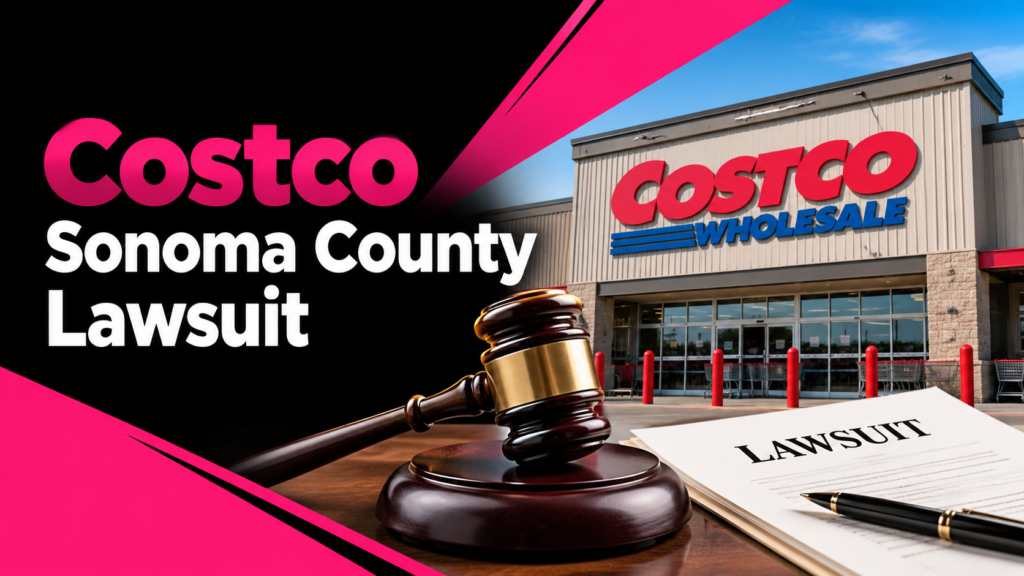

Retail stores see thousands of shoppers every day. Most trips end without incident. Yet when a heavy display falls and causes serious injury, questions about store safety and legal responsibility quickly arise. The Costco Sonoma County lawsuit involving a Santa Rosa shopper has drawn attention for exactly that reason. This article breaks down the known facts of the case, explains California premises liability rules in plain language, and outlines what injured customers should know about their rights.
What Happened in the Santa Rosa Costco Incident
On March 22, 2025, Sadie Novotny was shopping at the Costco warehouse at 1900 Santa Rosa Avenue in Santa Rosa. According to her complaint, she and her husband were looking at a liquor cabinet display when a large, heavy floor model fell and pinned her underneath.
Court documents describe the cabinet as having thin legs and resting on a worn or inadequate wooden pallet. Novotny alleged the display was in a dangerous and precarious position. In the incident report she completed that day, she wrote that she caught the cabinet and pushed it back, then felt pain in her right shoulder, forearm, hand, fingers, and lower back.
Her later lawsuit claims she suffered multiple permanent and severe injuries, including a closed head injury and traumatic brain injury. Her attorney has stated she was diagnosed with a mild concussion after going to the emergency room and has continued to experience headaches, vision problems, and difficulty finding words.
These are allegations. Costco has not publicly admitted liability, and the case remains unresolved.
Key Details of the Costco Sonoma County Lawsuit
Novotny filed her complaint on April 29, 2025, in Alameda County Superior Court. She named Costco Wholesale Corporation as the defendant and asserted claims for general negligence, premises liability, and products liability. She seeks approximately $14.11 million in damages. Reported categories include substantial amounts for pain and suffering, emotional distress, past and future medical expenses, and lost earnings or earning capacity.
Costco removed the case to the U.S. District Court for the Northern District of California, citing diversity jurisdiction because the company is based in Washington state. The federal case number is 3:25-cv-04786. As of mid-2026 court updates, the matter has been referred to private mediation, with fact discovery, dispositive motion, and trial deadlines extending into 2027. No settlement has been publicly announced.
The lawsuit is not a class action. It is an individual personal injury case centered on one shopper’s alleged injuries at one Santa Rosa location.
Understanding Premises Liability in California Retail Stores
California law does not make retailers absolute insurers of customer safety. Instead, property owners and operators must exercise ordinary care to keep their premises reasonably safe. This duty comes from Civil Code section 1714.
Customers are generally treated as business invitees. Stores must inspect for hazards, correct dangerous conditions within a reasonable time, or provide adequate warnings when immediate repair is not possible. The key California Supreme Court case is Ortega v. Kmart Corp. (2001). It holds that a plaintiff does not always need proof the store had actual knowledge of a specific hazard. Constructive notice can suffice if the condition existed long enough that a reasonable inspection would have discovered it.
In a display-related case, the analysis often focuses on whether the retailer created the condition, knew about it, or should have known about it through proper inspection and maintenance practices. Factors courts consider include the nature of the merchandise, how it was displayed, employee training, and inspection routines.
Actual Notice Versus Constructive Notice
Actual notice exists when an employee or manager sees the hazard or is told about it. Constructive notice arises when the hazard has been present long enough that reasonable care would have revealed it. In self-service warehouse environments like Costco, courts recognize that customers move merchandise and that displays can shift. That reality does not eliminate the duty. It often heightens the expectation of regular checks.
How Display Cases Fit Into Retail Negligence Claims
Falling merchandise or unstable displays raise questions about securing heavy items, using appropriate bases or pallets, and training staff to identify tipping risks. A plaintiff typically must show the condition created an unreasonable risk of harm, the store was negligent in addressing it, and that negligence was a substantial factor in causing the injury. Products liability claims may also enter the picture if the display unit or pallet itself is alleged to be defective.
What the Complaint Alleges Against Costco
According to published accounts of the complaint, Novotny claims Costco failed to adequately manage or operate its store and merchandise, failed to train and supervise employees properly, and failed to discover or warn about the unsafe condition of the cabinet display. The complaint asserts these failures were a substantial factor in her injuries.
Costco has filed an answer denying the allegations. As is common in such cases, both sides will engage in discovery, which can include video footage, employee statements, maintenance records, and medical evidence. One report noted that Costco may have video of the incident that has not yet been produced to the plaintiff’s side.
Readers should remember that a filed complaint contains one party’s version of events. Courts decide liability only after evidence is tested.
Customer Safety Standards and Retail Store Practices
Large warehouse clubs stock heavy furniture, appliances, and bulk goods. Displays are often designed to be eye-catching and accessible. Best practices generally include securing tall or top-heavy items, using stable bases, conducting frequent walk-through inspections, and training staff to respond quickly to reported hazards.
California does not impose a rigid inspection schedule by statute for every retail setting. Instead, reasonableness depends on the circumstances: store size, customer volume, type of merchandise, and known risks. Failure to follow internal safety protocols can become evidence of negligence, though it is not automatically decisive.
Shoppers also play a role. Paying attention to surroundings, avoiding unstable displays when possible, and reporting obvious hazards help reduce risk. Still, the primary legal duty rests with the property operator.
How to Protect Your Rights After a Store Injury
If you are hurt in a retail store, certain steps can help preserve a potential claim under California law.
First, seek medical attention promptly. Even if symptoms seem mild at first, head injuries and soft-tissue trauma can worsen. Document symptoms and follow treatment recommendations.
Second, report the incident to store management before leaving, if you are able. Ask for a written incident report and keep a copy. Note the names of employees involved or witnesses.
Third, take photographs of the scene, the display or hazard, your injuries, and surrounding conditions if it is safe to do so. Preserve clothing or other physical evidence.
Fourth, avoid giving recorded statements to insurance representatives without understanding your rights. California has a two-year statute of limitations for most personal injury claims, but evidence can disappear quickly. Consulting a qualified personal injury attorney early allows timely investigation and protection of evidence.
Fifth, keep records of medical bills, lost wages, and how the injury affects daily life. These form the foundation of economic and non-economic damages claims.
An experienced lawyer can evaluate whether the facts support a premises liability theory, a products claim, or both, and can navigate the procedural differences between state and federal court.
Common Pitfalls in Retail Injury Cases
Several issues frequently complicate these claims. Delayed medical care can give the defense an argument that the injury was not caused by the incident. Incomplete incident reports or failure to identify witnesses can weaken proof of notice. Social media posts that contradict claimed limitations may be used against the plaintiff. Waiting too long to investigate can allow video footage to be overwritten under routine retention policies.
Comparative fault is another consideration. California follows pure comparative negligence. If a jury finds the injured person partly responsible, damages are reduced by that percentage. Arguments about whether a customer should have noticed an obvious danger sometimes arise, though the law does not automatically bar recovery for open and obvious conditions.
The Broader Context of Shopper Safety Rights
Cases like the Santa Rosa matter highlight ongoing tension between high-volume retail operations and customer safety expectations. Warehouse clubs emphasize value and selection. That model can create unique display and stocking challenges. Public attention to serious injury claims can encourage better training and inspection practices industry-wide.
At the same time, not every accident results from negligence. Spills that occur seconds before a fall, or merchandise moved by other customers moments earlier, often fail to meet the notice requirement. Each case turns on its specific facts and evidence.
Local residents in Sonoma County and Santa Rosa who shop regularly at large retailers benefit from understanding these basic rules. Knowing what stores must do, and what steps to take after an injury, empowers consumers without encouraging frivolous claims.
Current Status and What Comes Next
As of the most recent publicly available court information in 2026, the Novotny case remains pending in federal court in San Francisco. It has been referred to private mediation, with discovery and motion deadlines set into 2027 and a potential trial date later that year. Outcomes can include settlement, dismissal, summary judgment, or a jury verdict. Nothing in the public record indicates a final resolution yet.
Future developments may appear in court dockets or local reporting. Readers following the case should rely on primary court records rather than secondary summaries.
Practical Guidance for Sonoma County Shoppers
If you are injured at a retail location:
- Get medical care and document everything.
- Report the incident in writing.
- Preserve evidence and contact information for witnesses.
- Consult a personal injury attorney familiar with California retail store negligence claims before speaking at length with insurers.
- Act within the applicable statute of limitations.
These steps apply whether the injury involves a falling display, a slip on a wet floor, or another hazardous condition.
Conclusion
The Costco Sonoma County lawsuit centers on serious allegations of injury from a falling display cabinet at the Santa Rosa warehouse. It raises important questions about how large retailers manage heavy merchandise and meet their duty of reasonable care under California law. Premises liability claims require proof of a dangerous condition, notice (actual or constructive), and causation. Injured shoppers have rights, but those rights depend on evidence and timely action.
Understanding the legal framework helps local residents, Costco members, and anyone concerned about retail safety make informed decisions. If you have been hurt in a store, consult a qualified personal injury attorney to evaluate your specific situation and protect your interests.
Frequently Asked Questions
What is the Costco Sonoma County lawsuit about?
It refers primarily to the personal injury case filed by Sadie Novotny alleging she suffered a traumatic brain injury and other harm when a liquor cabinet display fell on her at the Santa Rosa Costco in March 2025. She seeks approximately $14 million and asserts negligence, premises liability, and products liability claims.
Is the case still active?
Yes. As of mid-2026 updates, the matter is pending in the U.S. District Court for the Northern District of California, has been referred to mediation, and has discovery and trial deadlines extending into 2027.
What must a plaintiff prove in a California retail premises liability case?
The plaintiff generally must show the store controlled the property, a dangerous condition existed, the store knew or should have known about it through reasonable care, the store failed to fix or warn about it, and the condition caused the injury.
How long do I have to file a personal injury claim after a store accident in California?
Most personal injury claims must be filed within two years of the injury under the general statute of limitations. Exceptions and tolling rules can apply, so prompt legal consultation is wise.
Does Costco have a duty to secure heavy displays?
Retailers must exercise ordinary care. That can include using stable bases, conducting inspections, and training staff. Whether a specific display arrangement was unreasonable depends on the facts of each case.
Can I still recover damages if I was partly at fault?
Yes. California uses pure comparative negligence. Your recovery is reduced by your percentage of fault, but you are not automatically barred from recovery.
Should I talk to Costco’s insurance company after an injury?
You may need to report the incident, but recorded statements or broad releases should be approached carefully. An attorney can advise on how to protect your rights while cooperating reasonably.
You May Also Like: Understanding Lawsuit Abuse: Tactics, Impact, and Legal Reforms