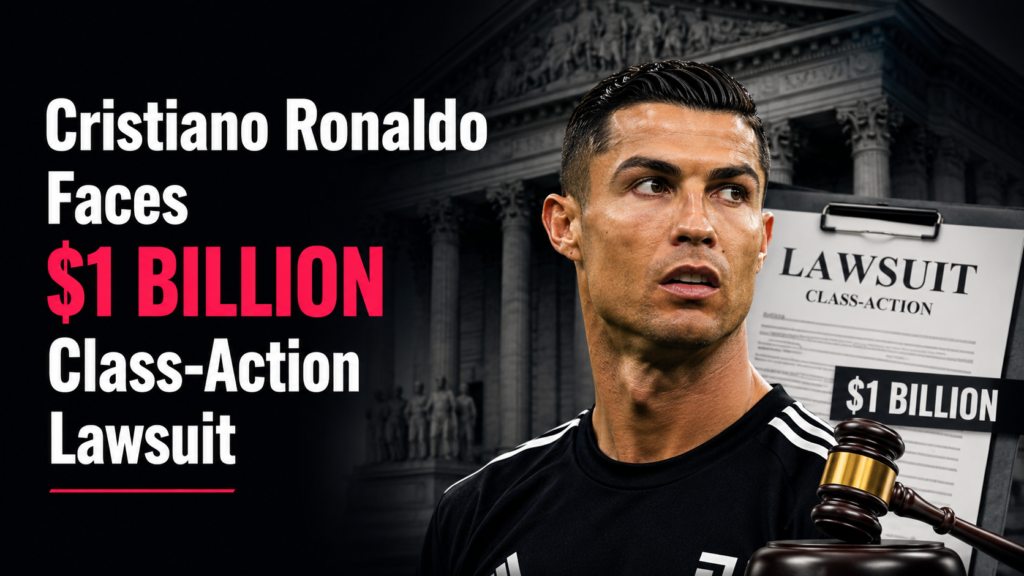

Football fans and crypto investors alike were stunned in late 2023 when news broke that Cristiano Ronaldo faces a $1 billion class-action lawsuit tied to his Binance promotions. The case, filed in Florida federal court, claims the soccer icon’s endorsement of a Binance NFT collection helped push everyday people toward unregistered securities and costly losses.
This article breaks down the lawsuit’s core claims, the legal rules around celebrity crypto endorsements, and what the fallout means for Ronaldo, Binance, and anyone following influencer-driven digital assets. You’ll walk away with a clear picture of the risks, the disclosures that matter, and why promoting financial products carries heavier liability than ordinary brand deals.
Background: The Binance Partnership and CR7 NFT Collection
In June 2022, Binance announced a multi-year partnership with Cristiano Ronaldo. The deal centered on non-fungible tokens, or NFTs, digital collectibles tied to blockchain ownership records.
By November 2022, just before the FIFA World Cup, the first “CR7” collection dropped exclusively on Binance. It featured seven animated digital statues of Ronaldo in iconic moments: bicycle-kick goals, childhood scenes in Portugal, and career highlights. Starting prices ranged from roughly $77 for basic versions to thousands of dollars for premium ones. Some reports put top-tier pieces near $10,000 or higher at launch.
Ronaldo promoted the drop heavily on social media. Posts directed fans to Binance, framed the NFTs as a way to “change the NFT game and take football to the next level,” and positioned the collection as a reward for long-time supporters. His personal website listed Binance among brands he believed in. Searches for “Binance” reportedly jumped hundreds of percent after the announcement, according to the later lawsuit.
Premium pieces sold out quickly. Yet within a year many of the same NFTs traded for around $1. That sharp drop, combined with broader crypto market turmoil and regulatory pressure on Binance, set the stage for investor anger.
The Lawsuit Filing and Core Allegations
On November 27, 2023, a proposed class-action complaint landed in the U.S. District Court for the Southern District of Florida (case number 1:23-cv-24481). Lead plaintiff Michael Sizemore, a California resident, sued on behalf of himself and others who allegedly bought unregistered securities through Binance after seeing Ronaldo’s promotions.
The suit seeks damages “exceeding” $1 billion. It names only Ronaldo as defendant in this filing, though related actions targeted Binance executives.
Key claims include:
- Ronaldo “promoted, assisted in, and/or actively participated in the offer and sale of unregistered securities in coordination with Binance.”
- His social media posts, NFT collection, and advertising campaign acted as mass solicitation that funneled fans onto the Binance platform.
- Once users signed up for the NFTs, they were more likely to buy other assets such as BNB tokens or join staking programs that plaintiffs call unregistered securities.
- Ronaldo failed to disclose “the form or amount of his compensation by Binance,” a requirement under U.S. securities law when promoting securities.
- Given his resources and investment experience, he “knew or should have known” of potential problems with Binance selling unregistered crypto securities or aiding fraud.
Plaintiffs argue the promotions were “deceptive and unlawful” and targeted consumers unfamiliar with crypto. They point to a 500% rise in “Binance” search interest after the CR7 launch as evidence of the campaign’s reach and impact.
The timing was notable. The complaint arrived just days after Binance and its founder Changpeng Zhao (CZ) reached a massive $4.3 billion settlement with U.S. authorities over anti-money-laundering and sanctions violations. That settlement included criminal pleas, a multi-year monitorship, and CZ stepping down as CEO.
Understanding Unregistered Securities in Crypto
U.S. securities law starts with a simple idea: if something looks like an investment contract, it usually needs registration or an exemption. The classic test comes from the 1946 Supreme Court case SEC v. W.J. Howey Co. An investment contract exists when someone invests money in a common enterprise with a reasonable expectation of profits from the efforts of others.
Many crypto tokens and some NFT projects have been argued to meet that test. Plaintiffs in the Ronaldo case claim certain Binance offerings (BNB, staking products, and related programs) fit the definition and were sold without proper registration. Promoting those products without disclosures can create liability under both federal and state law.
Celebrity crypto endorsements sit at a special intersection of advertising rules and securities rules. The Securities Act’s anti-touting provision (Section 17(b)) requires anyone who receives compensation to promote a security to disclose the nature, source, and amount of that payment. Failure to do so is itself a violation, even without proving fraud.
The SEC has enforced this repeatedly. In 2022 Kim Kardashian paid $1.26 million to settle charges for promoting EthereumMax tokens on Instagram without revealing a $250,000 payment. Similar actions hit other celebrities and athletes. The agency has long warned that paid promotions of crypto assets that qualify as securities demand full transparency.
In the Ronaldo suit, the absence of clear paid-promotional disclosures forms a central pillar of the claims. Plaintiffs say the star’s massive following (hundreds of millions across platforms) amplified the problem and that the promotions created a false sense of safety around Binance products.
Celebrity Endorsement Risks Versus Ordinary Product Deals
Promoting sneakers or soft drinks is one thing. Promoting financial products is another. Consumer goods rarely trigger securities registration or anti-touting rules. Crypto assets often do.
When a celebrity’s endorsement can be seen as soliciting investment, liability expands. Courts and regulators look at whether the promoter participated in the offer and sale, whether disclosures were adequate, and whether the audience was led to believe the product was safer or more legitimate because of the famous name.
Real-world patterns show the pattern. High-profile athletes and entertainers signed big crypto deals during the 2021-2022 boom. Many of those assets later collapsed in value. Lawsuits and regulatory actions followed. The Ronaldo case stands out for its size and for tying a single celebrity’s promotional activity to alleged platform-wide sales of unregistered securities.
Paid promotional disclosures are not optional window dressing. They exist so investors can weigh whether the endorsement is independent or bought. Omitting them can support claims under state consumer-protection statutes as well as federal securities law. Florida and California law feature in the complaint, along with theories of aiding and abetting.
For financial-risk analysts, the lesson is straightforward: celebrity reach multiplies both marketing power and legal exposure. Contracts that once focused on brand safety now need detailed securities-compliance clauses, clear compensation language, and ongoing monitoring of the underlying product’s regulatory status.
Procedural Path and Current Status
The case was assigned to Judge Roy K. Altman in the Southern District of Florida. Early motions included a defense request to dismiss or compel arbitration. In May 2024 the court stayed proceedings pending resolution of arbitration questions in a related action against Binance figures (Sizemore et al. v. Zhao et al.). The motion to dismiss was denied without prejudice.
Public docket information indicates the Ronaldo case was closed and stayed at that point while the arbitration issues moved forward. Later reporting noted the partnership between Ronaldo and Binance continued in some form, with additional digital collectibles announced in subsequent years.
Class certification, discovery, and any eventual trial or settlement remain contingent on the related proceedings. Class actions of this scale often take years and frequently resolve through negotiated agreements rather than jury verdicts.
Implications for Binance and the Broader Crypto Market
Binance entered the Ronaldo lawsuit already under heavy regulatory pressure. The November 2023 $4.3 billion package resolved criminal and civil claims from the Justice Department, Treasury’s FinCEN and OFAC, and the CFTC. It included admissions related to Bank Secrecy Act failures, sanctions screening gaps, and inadequate anti-money-laundering controls. A multi-year independent monitor was imposed.
The celebrity lawsuit adds a different layer: private investor claims that the platform’s growth was partly fueled by high-profile endorsements that allegedly papered over compliance problems. Even if the Ronaldo case stays stayed or ultimately settles modestly, it reinforces the message that platforms and promoters share risk when marketing reaches U.S. investors.
For the industry, the episode accelerates two trends. First, exchanges and projects face stricter scrutiny of marketing partnerships. Second, influencers and athletes demand clearer legal advice before attaching their names to crypto products. Investor financial loss from celebrity-hyped assets has become a recurring theme in both regulatory actions and private litigation.
What Investors and Consumers Should Take Away
Celebrity endorsements create powerful emotional shortcuts. A trusted athlete’s name can make a complex digital asset feel approachable. That same shortcut can obscure risk.
Practical steps for anyone evaluating celebrity-backed crypto products include:
- Check for clear paid-partnership language and disclosure of compensation amounts.
- Research whether the asset or platform has faced SEC, CFTC, or state securities actions.
- Treat any “exclusive” NFT or token drop as a high-risk speculation, not a guaranteed collectible or investment.
- Remember that past performance of a celebrity’s brand does not predict future value of an associated digital asset.
Regulators continue to emphasize that investors, not celebrities, bear the ultimate responsibility for due diligence. At the same time, the law places affirmative duties on paid promoters. The tension between those two realities sits at the heart of cases like this one.
Broader Lessons on Crypto Influencer Liability
Crypto influencer liability is no longer theoretical. Courts and agencies have shown they will examine social-media posts, compensation arrangements, and the downstream investment behavior of fans.
Precedents such as the Kardashian settlement and earlier actions against athletes establish that “I was just promoting a cool project” is rarely a complete defense when securities are involved. Contracts that once focused on creative control now require securities counsel, precise disclosure language, and sometimes representations about the regulatory status of the underlying product.
For sports fans who also invest, the Ronaldo case is a reminder that the same star who delivers match-winning goals can also appear in high-stakes financial litigation. The two worlds overlap more than many expected when the NFT boom began.
Conclusion
The claim that Cristiano Ronaldo faces a $1 billion class-action lawsuit over Binance NFT promotions highlights the real legal and financial risks of celebrity crypto endorsements. Plaintiffs allege the soccer star’s promotions helped solicit investments in unregistered securities without proper disclosures, contributing to substantial losses. Binance’s own regulatory settlements provide important context.
Key takeaways are clear: full compensation disclosure is mandatory when securities are involved, celebrity reach amplifies both marketing power and liability, and investors must look past famous names to the underlying product risks.
If you hold or are considering celebrity-linked digital assets, review the original promotional materials for disclosures and consult a qualified securities attorney for advice tailored to your situation.
Frequently Asked Questions
Why does Cristiano Ronaldo face a $1 billion class-action lawsuit?
Plaintiffs claim his promotion of the CR7 NFT collection and Binance platform helped solicit purchases of unregistered securities and that he failed to disclose compensation, leading to investor losses.
What is the CR7 NFT collection?
It is a series of animated digital statues of Ronaldo released exclusively on Binance in November 2022, with prices starting around $77 and later falling sharply.
Did Ronaldo have to disclose how much Binance paid him?
Under U.S. securities law, paid promoters of securities must disclose the nature, source, and amount of compensation. The lawsuit alleges this did not happen adequately.
What is the current status of the lawsuit?
The Florida federal case was stayed in May 2024 pending arbitration rulings in a related matter and has not proceeded to trial.
How does this compare to the Kim Kardashian SEC case?
Kardashian settled for $1.26 million after promoting a crypto token without disclosing a $250,000 payment. The Ronaldo case is a private class action seeking far larger damages and involves broader solicitation claims.
Are NFTs always considered securities?
Not automatically. Classification depends on the Howey test and the specific facts of the offering. Some NFT projects have been treated as securities; others have not.
What should crypto investors learn from celebrity endorsement cases?
Verify disclosures, research the platform’s regulatory history, and treat celebrity involvement as marketing rather than a guarantee of safety or value.
You May Also Like: Torrid Discount Class Action Settlement: $13.8M Lawsuit Details & Deadlines